Written by Alec Boyd-Devine @devineconservation
The Tongass National Forest is the largest National Forest in the United States, possessing some of the most unique backcountry opportunities in the country. The Tongass is surrounded by Alaska’s Inside Passage, whose cold waters are fed by the various glaciers that wind their way through the towering mountains which characterize this special temperate rainforest. These cold waters support some of the densest biomass anywhere in the world, supporting a variety of life from salmon and halibut to whales and sea ducks. The Tongass is a place I feel honored to call my home.
Growing up in Indiana, access to truly wild places like the Tongass was limited. My grandfather brought me to Alaska a few times growing up. Once was when I was a young child. The mountains of Alaska were some of the first my young, adventurous eyes had ever seen. We traveled around the state visiting Denali National Park, Fairbanks, Kodiak, and Anchorage. But what stuck out to me the most, was the landscape and waters of Southeast Alaska.
Water is a central part of life in Southeast Alaska, and for anyone who calls Southeast Alaska home. If you call Southeast Alaska home, you likely also call the Tongass home. Water shapes our lives every day in one way or another and takes many forms. It takes the form of the glaciers which push their way into our topography and also falls from the sky, sometimes constantly, like in Ketchikan, which averages twelve to thirteen feet of rain per year. The water that stuck out to me as a young boy was the ocean. Alaska’s Inside Passage, which creeps up most of Southeast Alaska, is a central part of the Tongass National Forest. These dramatic landscapes showcase mountains falling off into seas and rainforests edging onto beaches. On this trip, I had the opportunity to go salmon fishing and then saw my first humpback whale. These two experiences stuck out as I grew up, throughout college, grad school, and my first years of employments in various jobs. I knew someday I wanted to return to Southeast Alaska in order to continue the memories that were started as a young boy.
This opportunity was presented to me, first, in the form of photo-guiding. I had dabbled in this industry throughout the lower forty-eight as a means of being outside for work, and finally convinced my wife to follow me north for a six-month contract, a start. We drove our car and the small camper I had built from Colorado through Montana, Alberta, British Columbia, the Yukon, and finally into Skagway, Alaska. Here I boarded the ferry to finsih our journey via the unique Alaska Marine Highway System and made our way to Juneau, my new home for the next six months.
When I arrived in Juneau, I had one goal: find a small boat I could take out onto the ocean and learn to harvest the many fish and game species the Tongass had to offer. There are no roads connecintg southeast Alaska communities, which almost necessesitates a boat for further exploring, and I wanted to explore all the wild Tongass has to offer. From sitka black-tailed deer, to black bears, ducks and geese, a boat is one way to open up more success in hunting and fishing in this unique part of the world. I finally found a small 18-foot Lund and bought it on the spot. I repaired the holes in it the best I could and splashed the boat into the water with big hopes and dreams. One dream was to introduce my wife to fishing and convince her to partake in wild harvested table fare beyond berries and greens. My wife, our dog, and I loaded into the Lund and pushed off the dock...
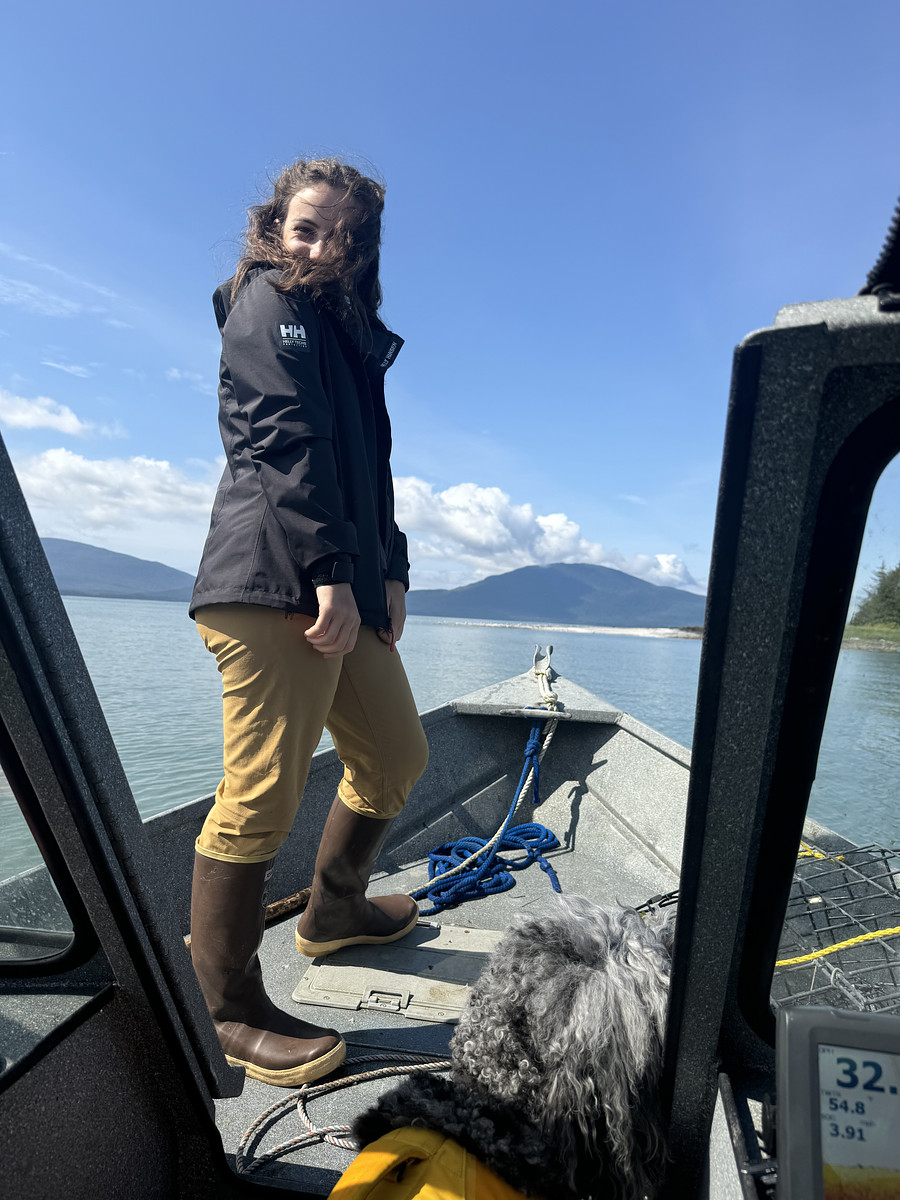
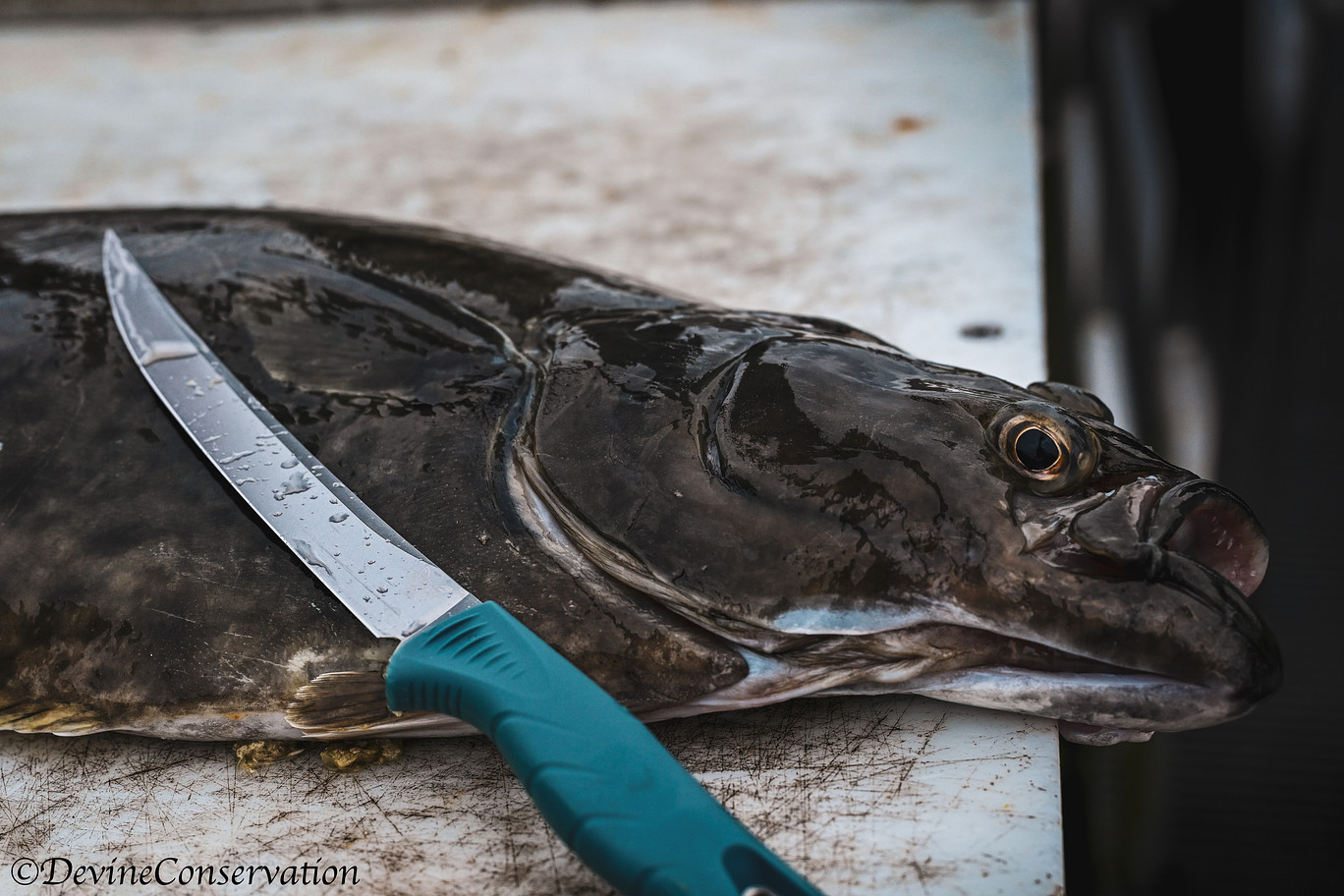
I had purchased my wife a fishing license in hopes she would give it a shot. Worst case, we had just supported conservation in this great state; best case, she would pull up a crab pot or wet a line. After a few minutes of watching me jig unsuccessfully, she decided to speak up. “Is this it? I suppose I can try that out.” I readied a rod for her to drop down, and of course, almost immediately she hooked up. Helping her reel in the fish, as it approached the surface, we saw it was a good-sized halibut, maybe 40lbs! We hauled the fish into the boat, and I had her hold it. As she was holding the fish for a photo, a humpback whale lunge-fed, about 25 feet behind me. She dropped the fish in excitement and looked at me, exclaiming, “This is the coolest place in the world, we are never leaving.”
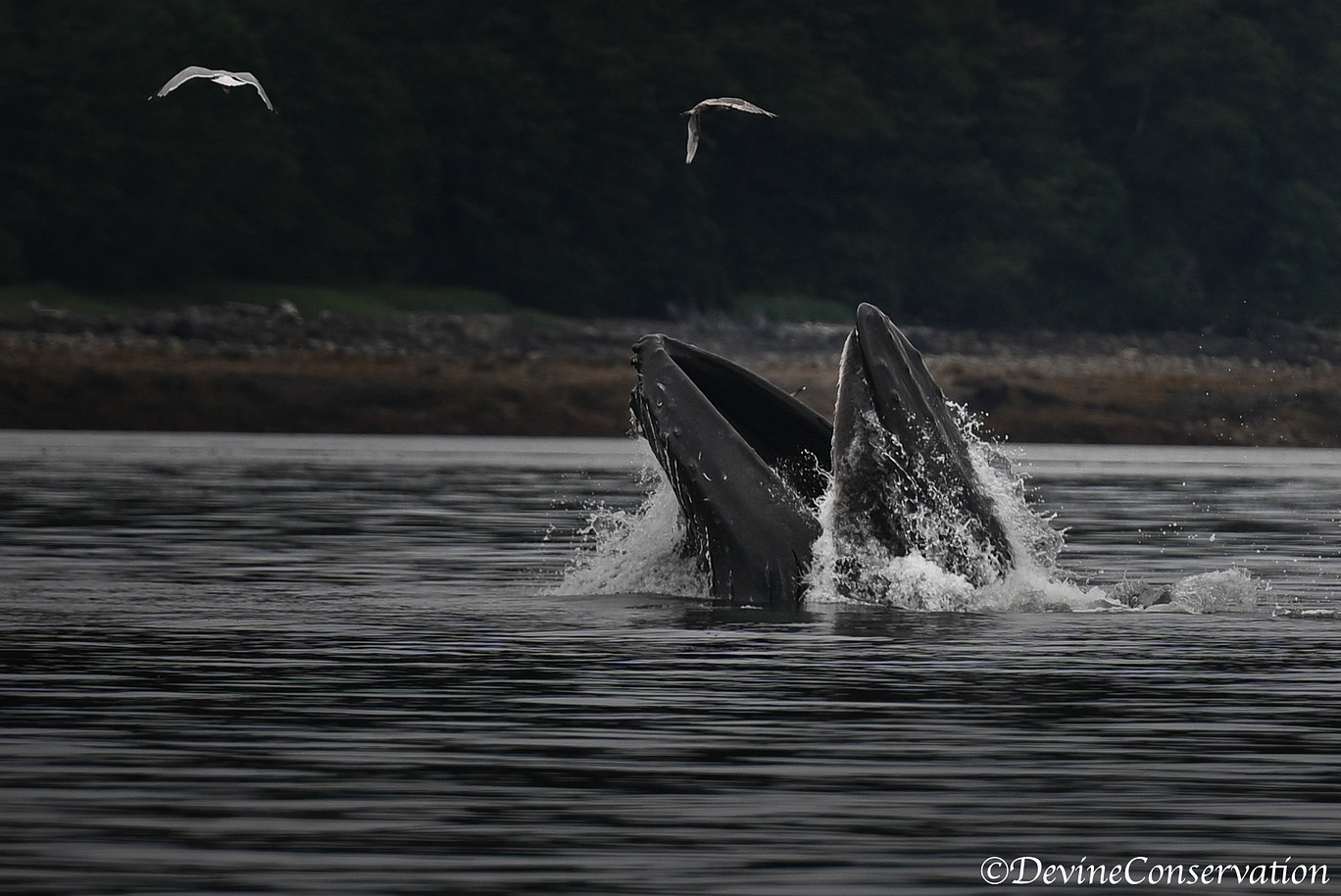
This feeling is my constant sentiment here, in the Tongass. Whether I am chasing sea ducks in that same little Lund, hiking ridges in August looking for deer, or fishing for halibut, the Tongass and its waters provide. The halibut was food for our table, the whale provided memories for our minds, and the Tongass continues to provide us with the opportunity to experience things that are truly wild.
3256