Missouri BHA Chapter Hosts Elk Camp in the Ozarks
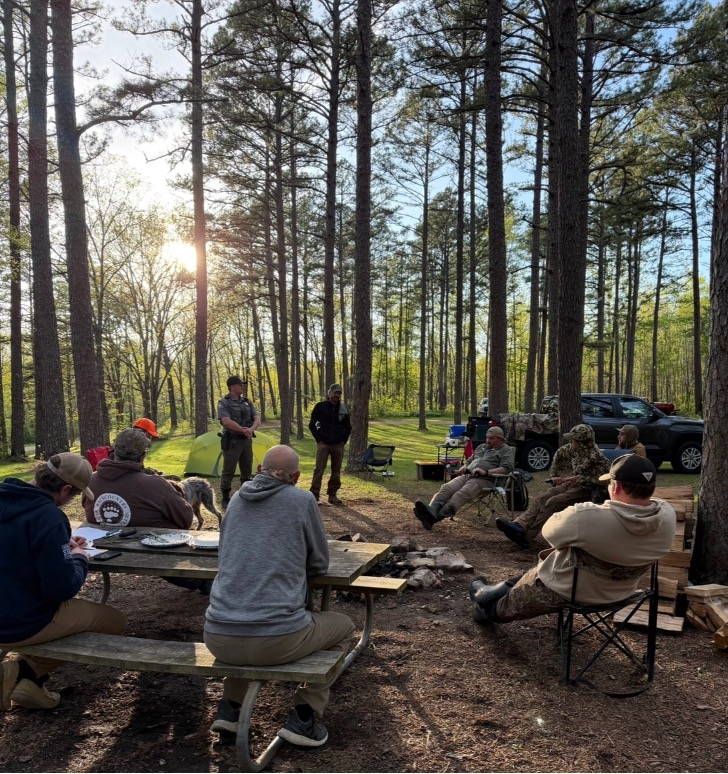
When one thinks of elk, most of the time their mind is drawn to western landscapes high in the Rocky Mountains. However, deep in the heart of the Missouri Ozarks is a population of about 300 elk scraping out a living in eastern hardwoods. These elk were brought to Missouri as part of a reintroduction effort between 2011 and 2013 to a place called Peck Ranch Conservation Area. On the weekend of April 17th-19th, the Missouri Chapter of Backcountry Hunters and Anglers (BHA) met at Peck for a chapter campout and habitat improvement day.
 Area biologist, Jonathan Fusaro, invited the chapter down to help him out with some projects around the area. He stated that the Missouri Department of Conservation (MDC) has work crews that have an abundance of tasks to complete across several areas; and a biologist might get those crews only few times a year. As a former California BHA board member, Jonathan wanted to build a working relationship with the Missouri chapter to assist in areas that may take weeks, months, or even years before he or MDC work crews could get to them. These projects included locating and conducting pond surveys, as well as putting up exclusion fences in food plots.
The ponds scattered around the area were either remnants from homesteads or put in place by early area managers to benefit wildlife. Over time, the quality of these ponds can degrade so taking an inventory of them and their condition can help determine if time and resources should be used to restore them to a functional water source again. Members also recorded the locations of these ponds so that area maps can be accurately updated with current information. The chapter located and recorded information on approximately 30 different ponds of varying condition scattered about the area.
 Exclusion fences consist of a fence panel and T-post. The panel is wrapped into a circle with each end being secured to the T-post with wire. This simple setup will allow Jonathan to monitor food plot progress and wildlife usage by comparing the height difference in vegetation inside and outside the fence. In other words, how much wildlife is browsing the vegetation in the food plots. The chapter set up about 10 exclusion fences on food plots.
Once the work was complete on Saturday, the chapter was treated with a surprise visit from the local game warden for a fun round of “Ask a Game Warden.” Following that, all members met in the area headquarters for a presentation on the elk introduction project and the current status of the herd. The night ended with a roaring bonfire, roasted venison loins, some cold drinks, lots of laughter, and tall tales.
 A large part of the elk restoration project wrestled with the pros and cons of the impact these large cervids would have on the community. Ultimately, it was decided that the impact on the community would be a positive one. After attending this campout, I can personally attest that these elk are still having positive effects on communities. They strengthened relations and built partnerships between BHA and MDC and brought members from all corners of the state to a little campground underneath short leaf pines, deep in the heart of the Missouri Ozarks.
591

Missouri BHA Chapter
Aiming toward bettering public lands, waters & wildlife through conservation, education & working together to ensure America's hunting & fishing heritage.
Other posts by Missouri BHA Chapter
Contact author
Full biography
Full biography
Aiming toward bettering public lands, waters & wildlife through conservation, education & working together to ensure America's hunting & fishing heritage.
x