Biathlon: The perfect conservation conversation starter
Space age looking guns, skinny skis, spandex. Announcers with accents, video closeups of drool and snot, spectators in costumes, and cowbells. Of course I am talking about the sport of biathlon. Here in the US biathlon becomes a common household topic once every four years when the winter Olympics roll around and then disappears into obscurity again for most of the population. Right now is the glory days.
Competition level biathlon has a high barrier to entry. The space age looking guns are ritzy, specialized .22 Long Rifles, where a used one will set you back at least $4000. Top of the line skis, boots, bindings, and poles will be another several thousand. You have to be a member of the International Biathlon Union and have taken safety courses to even enter a sanctioned race. Not to mention you have to be able to ski while carrying a gun and then use said gun to shoot very tiny targets while you can feel your heart beating in your teeth. It’s not some leisure Saturday sport you can try for fun.
But it can be!
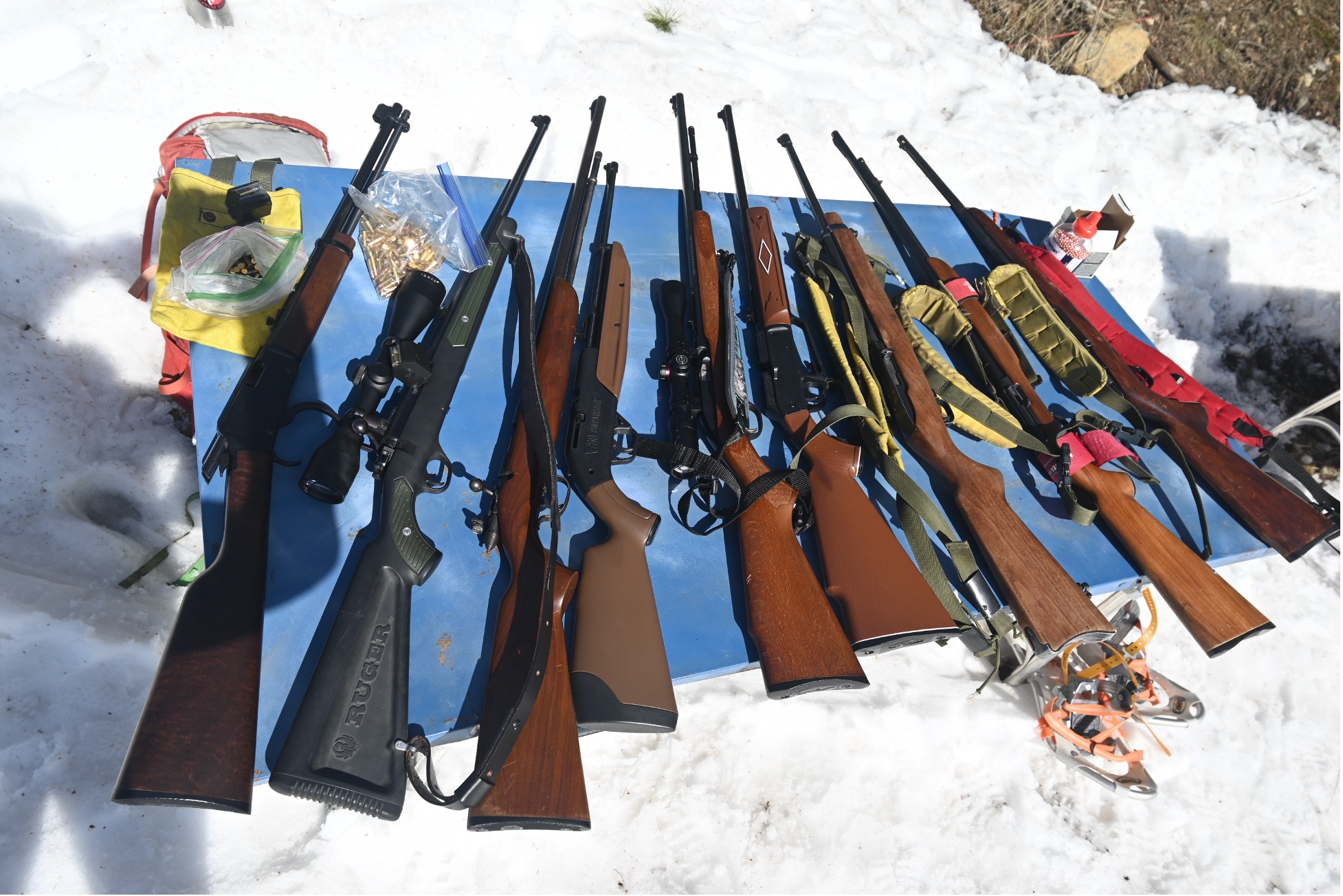
A table full of .22LR - all of them legal in our biathlon - none of them legal in the Olympics.
Many of us hunters have a .22 LR kicking around that we might use to target practice or squirrel hunt. Add skiing, snowshoeing, or running to the mix and you too can be a biathlete.
We’ve been holding a biathlon “race” at our property for over six winters now, with the recent addition of a summer version as well. Our barrier to entry: a sense of adventure! If someone doesn’t have a .22 LR, we let them borrow one of ours and safely teach them how to use it. Any type of skis are welcome, but if you don’t ski, you can use snowshoes. In the summer we run or mountain bike. Over the course of the 10 or so different races we’ve held, we’ve had over 30 friends try biathlon for the first time. And they all want to do it again.
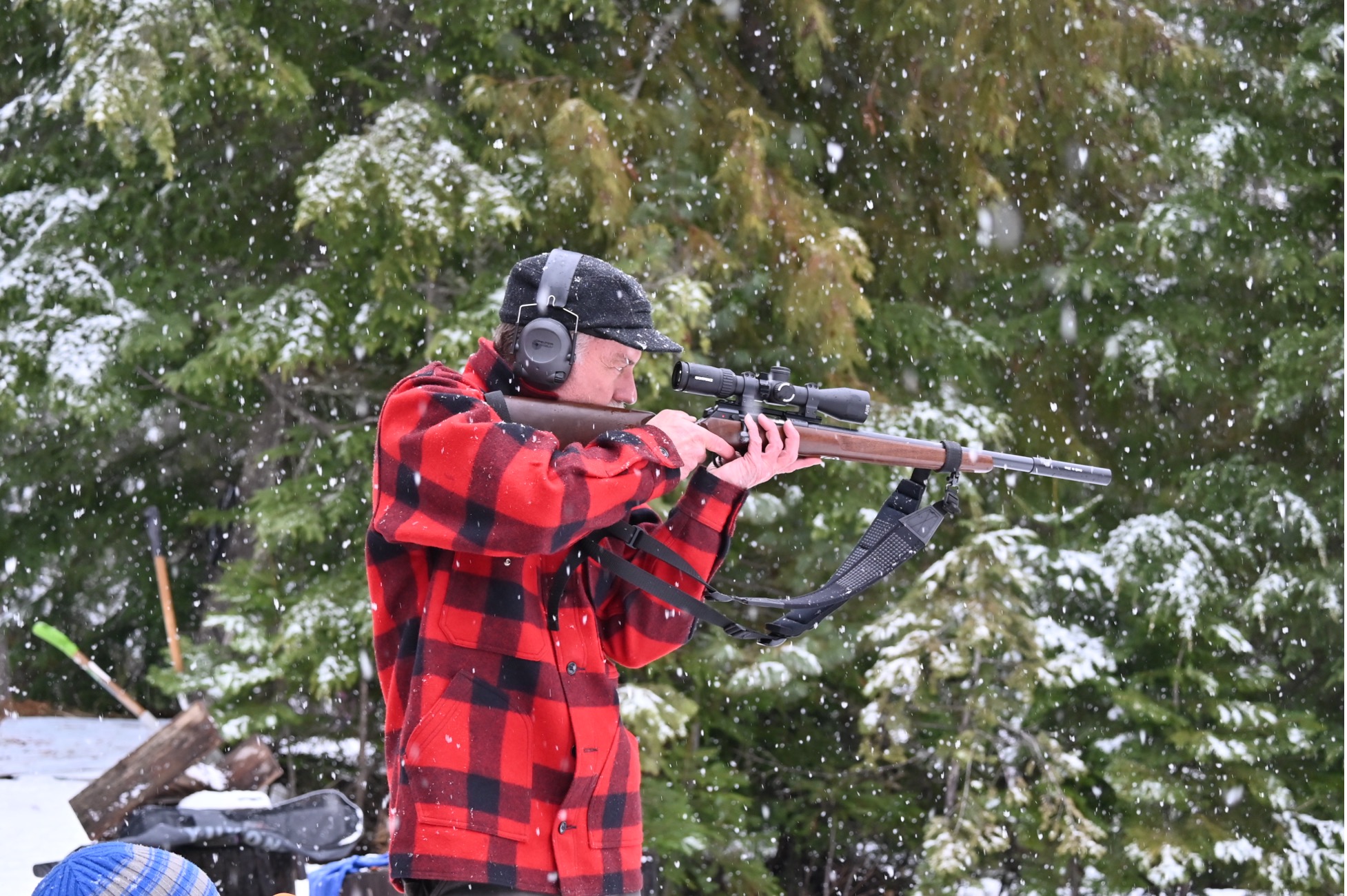
People who want to carry their gun on the laps come up with homemade slings.
Just as important as people trying a new sport and the camaraderie we experience during these events, are the conversations that come out of it. Many friends who come are from the skiing side of our lives, lots who have never shot a gun before, much less hunted. We teach them how to shoot in a safe and controlled environment, usually with a silenced, scoped, semi-automatic. Many are astonished they have just shot a semi-auto and not felt scared, and even - *gasp* - liked it.
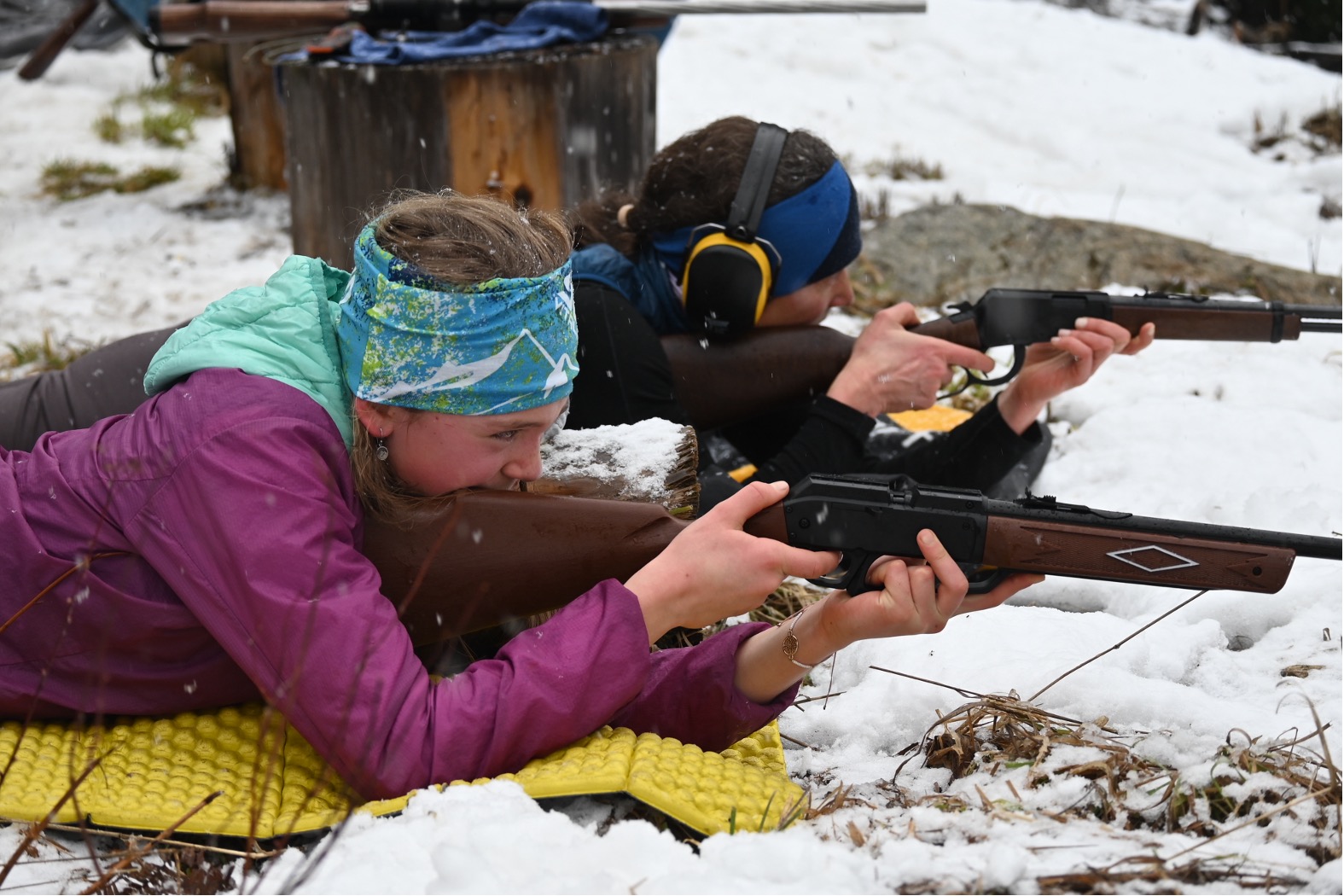
Use an airgun or BB For kids and bring the target closer than the adult ones.
Another avenue of conservation conversations that takes place during our winter events is around trapping. Our ski loop and our bobcat trap line intersect at several different places on the property. We have a lot of dogs involved, including our own. For those uninitiated with trapping, it helps change their perception of what a trap line looks like. Back at the house, we can also show them how to get a dog out of other types of traps they might encounter out in the woods.
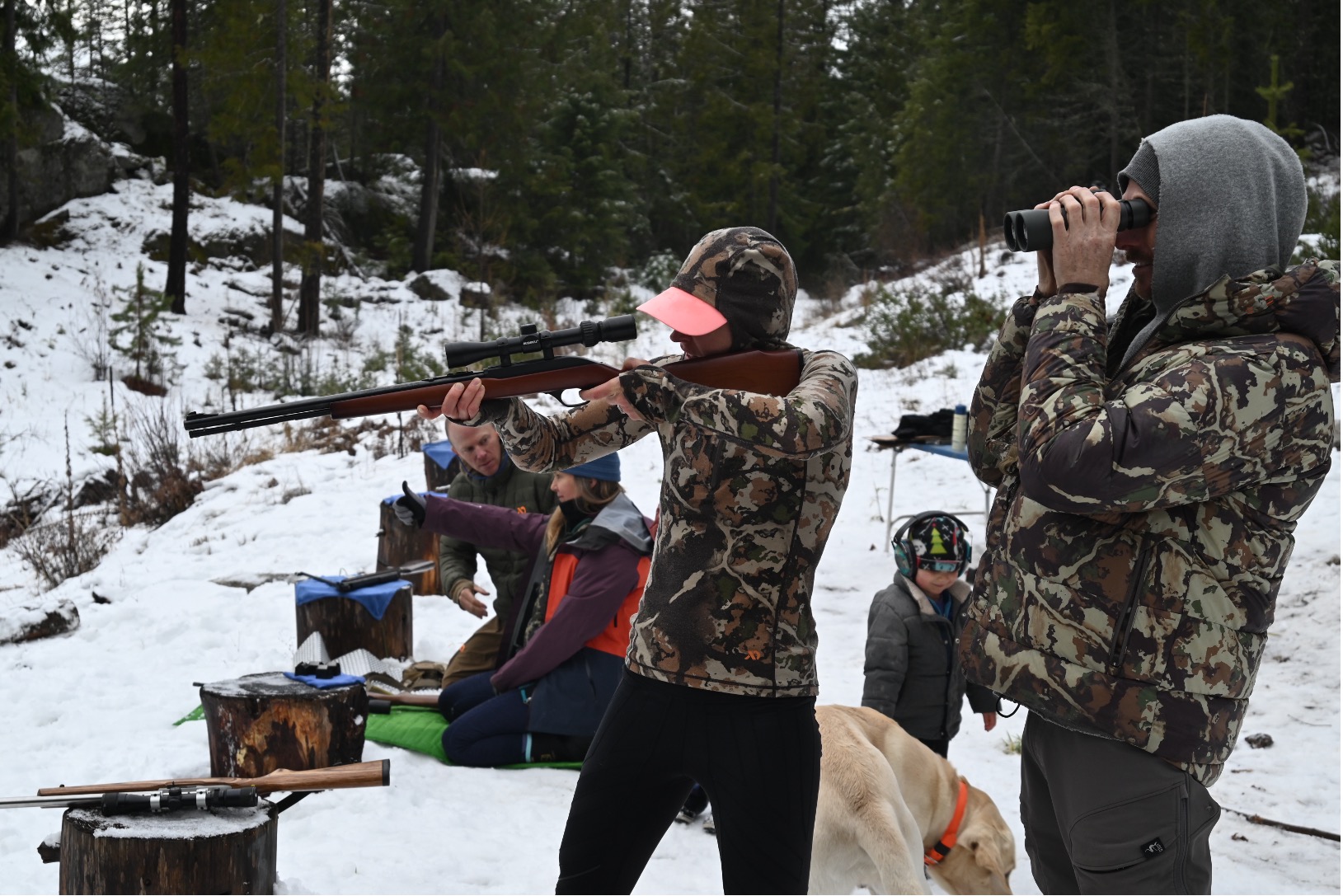
Paige Berger shoots while Brandon Park checks her hits, both are BHA members.
And of course, we always have a potluck afterwards, the venison (or bobcat) diplomacy shining through in many of the dishes we make or are brought by our hunter friends.
So as your armchair quarterback the Olympic biathlon races, thinking you could be just as good with a little training, gather up some of our friends for your own biathlon race and put that talk into action. Pack your .22’s, cardboard targets, binoculars, and some snacks. Find a safe shooting location on public land where you can do a short ski or run and hold your own event. I look forward to seeing a BHA member competing in the 2030 games!
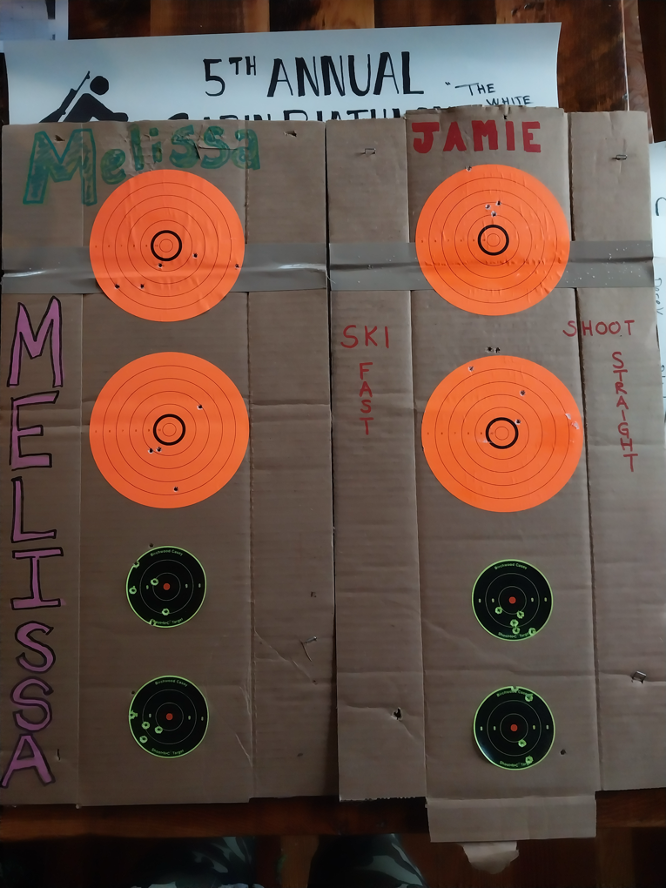
We save up cardboard and use 6” peel and stick targets for standing shots and 3” ones for prone (lying down). Our range is about 30 yards.
867