Standing on Strong Ground
Twenty years is a long time to give to anything.
For nearly two decades, David Lien has given his time, energy, and an extraordinary amount of persistence to Backcountry Hunters & Anglers. The end of David’s term marks an opportunity to recognize just how much of the organization we know today bears the fingerprints of his service.
David joined BHA in March 2005, when the organization itself was barely a year old. He began his term as Colorado chair in July 2006, when Colorado was BHA’s first and only state chapter. In short order, he went on to serve on BHA's national Board of Directors for eight years and helped establish and lead the Minnesota chapter.
While the numbers tell part of the story, David’s contributions over these many years tell much more.
When David joined the Colorado BHA leadership team, the chapter had roughly 50 members. By the end of 2019, it had grown to nearly 3,000, with a statewide network of volunteer leaders taking responsibility for public lands, habitat, policy, events, mentorship, stewardship, and advocacy.
In 2009, David created BHA's Habitat Watchmen program, which mobilized volunteers to pay attention to management decisions and threats to wildlife habitat in the places they knew firsthand. This became a model other chapters built upon and reflects the boots-on-the-ground organization that our own CEO Ryan Callahan has recently described – one that members and governing agencies alike have grown to know and trust. This work helped earn David recognition as a Field & Stream "Hero of Conservation" in 2014. Five years later, BHA honored him with the Mike Beagle Chairman's Award for extraordinary dedication to the organization's mission.
And the conservation legacy of those years is visible on the ground. During David's tenure, Colorado BHA became a leading voice for greater access to Colorado state trust lands, contributing to years of advocacy that ultimately resulted in hundreds of thousands of additional acres becoming available for public recreation. The chapter took on habitat protection, responsible motorized use, wildlife management, public access, oil and gas development, wilderness, and public-lands policy across the state.
Some of those fights have lasted long enough to remind us that conservation victories are rarely permanent. Nearly two decades ago, David described the Roan Plateau as a "line in the sand" for hunters and anglers who value intact fish and wildlife habitat. In 2026, Colorado BHA is once again working to defend that same landscape.
There is something fitting about that as the chapter transitions to new leaders taking the reins. Conservation is not work we finish. It is work we inherit.
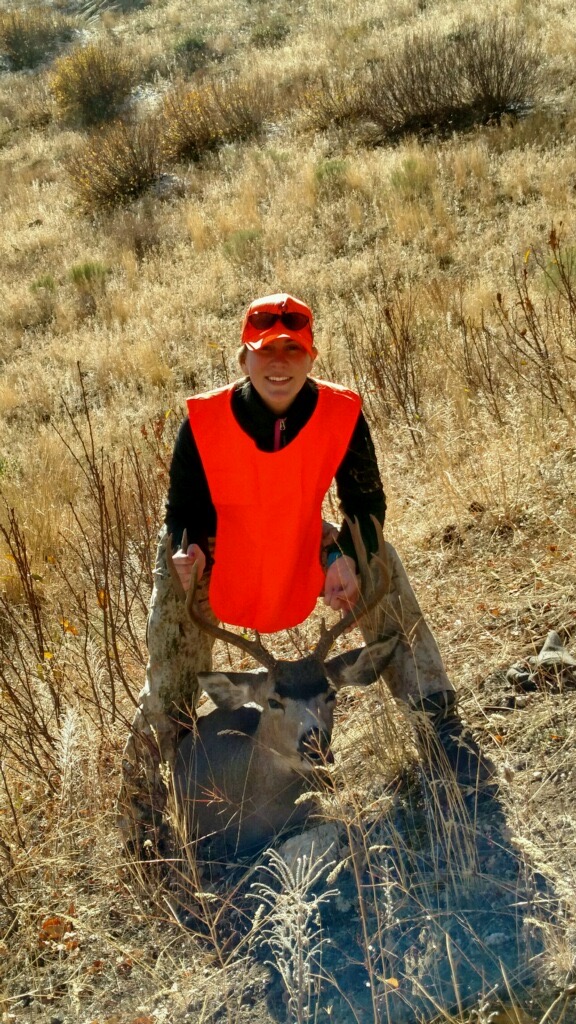
About a decade after BHA was founded, I began volunteering while I was a graduate student in Idaho. After moving to Colorado, I joined the Colorado Chapter Leadership Team as a Denver Metro Assistant Regional Director in 2019 and later served on the chapter's Executive Leadership Team and Board.
Along the way, much of the work that has mattered most to me has centered on a question that I believe will be increasingly important for conservation organizations: How do we turn people who care about wild places into people who know how to care for them?
That question was at the heart of Women in the Woods, which began in 2020 as a series of stories, conversations, and events meant to help people move "from curious to committed." We need to build the confidence, knowledge, and engagement necessary to create a future filled with people willing to fight for public lands and the wildlife that depend on them.
The challenges facing Colorado's public lands and wildlife are not getting simpler. Neither should our response. The next chapter of Colorado BHA should continue to be unmistakably BHA: boots on the ground, sleeves rolled up, and willing to show up. We need people who will speak when wild places need a voice and who are stubborn enough to buckle up for the long haul.
As we look to the future, we will keep building. We will create pathways for members to become leaders. We will strengthen relationships within the communities closest to the landscapes where decisions are being made.
To bring more people into conservation, we recognize that not everyone arrives with the same background or perspective, but we can provide meaningful opportunities to learn, participate, discuss priorities, and work together. And we will remain fierce advocates for wild lands, waters, and wildlife—not merely because of what those places provide us, but because healthy landscapes and functioning ecosystems are worth passing intact to those who come after us.
One of the things I have always appreciated about BHA is that we do not have to agree on everything to recognize what is worth protecting. I wrote several years ago that our strength comes from a network of people with different opinions, expertise, and ideas who are still capable of intelligent, considerate conversation. I believe that even more strongly today. That kind of organization doesn't happen accidentally. It has to be built, tended, and handed forward.
David has done an extraordinary amount of that tending. This transition is not about closing the book, but about taking responsibility for what comes next. In honoring twenty years of volunteer leadership, we take the foundation that was built, invite more people onto it, and see how much farther we can go.
There is a lot of trail behind us, but there is even more ahead. And, borrowing the words BHA founder Mike Beagle has used throughout this organization's history, the best is yet to come.
235