Federal property managers have faced a number of challenges over the last year as cuts to federal agencies have reduced staffing and funding. Cuts to USFS staff have been well-publicized, but U.S. Fish and Wildlife (USFWS) properties, including National Wildlife Refuges, are experiencing the same shortfall. For the Refuge System, however, this is on top of years of dwindling funding.
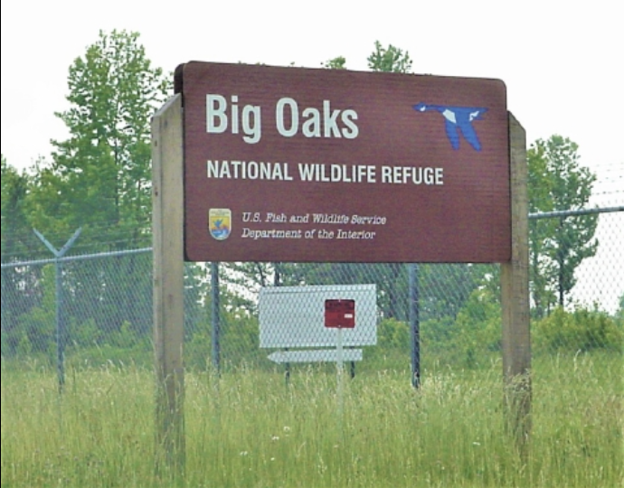
Here in Indiana, one such property is Big Oaks National Wildlife Refuge, a 50,000 acre gem in southern Indiana. After the former property manager, Joe Robb, retired in January of this year, the refuge staff was cut from 5 full-time employees to 1, and it is now managed by Justin Sexton, who is based out of southern Illinois. These deep staff cuts have led the USFWS Region 3 office to consider closing the property to public access and cancelling their “Memo of Agreement” (MOA) with the Army, who owns the land. As of May 18, 2026, public access to the property is now limited to 2 days per week.
Brief Background on Big Oaks NWR
Big Oaks National Wildlife Refuge exists on what was once the Jefferson Proving Grounds, a military base and munitions testing ground for the U.S. military that opened during WWII. In 2000, Big Oaks was created as an "overlay refuge" under a joint agreement with the U.S. Army and Air Force and USFWS through a 99-year real estate permit. As an overlay refuge, the Army retains ownership and the USFWS manages the property. The MOA was renegotiated and re-signed in July 2020. The new MOA allowed the USFWS to obtain a 99-year permit to administer the lands under the National Wildlife Refuge system.
The mission of Big Oaks, according to the MOA, is “to preserve, conserve, and restore biodiversity and biological integrity for the benefit of present and future generations of Americans.” Goals for the property include providing the public withopportunities for high quality wildlife-oriented recreation (hunting, fishing, environmental education, interpretation, wildlife observation and photography).
Currently, the Indiana Air National Guard operates an air-to-ground bombing range on the remaining 1,033 acres of the former proving grounds, adjacent to Big Oaks. Previously, the refuge had a good partnership with the Air Guard and Army
As of 2026, due to staff and funding cuts, one way out of managing the property and closing it to the public is opting out of the existing MOA Or, the MOA could potentially be renegotiated to limit public hunting days. The Region 3 Office has said they are considering this first option as a solution, even though this would mean the loss of 50,000 acres of public land in Indiana. BHA finds this option unacceptable.
In the past, the refuge offered fishing and hunting (squirrel, turkey, and deer) to over 6000 participants yearly. Also, visitors from the surrounding states, nationally and internationally, came to the refuge to hike, birdwatch, and view the refuge habitats and brought economic returns to the surrounding local communities.
Overview of the Primary Issue
According to communications with local conservation organizations, the USFWS Director of Region 3, Will Meeks, is considering submitting a 180 day notice to withdraw from the MOA with the army. This would mean the closure of the property altogether.
In addition to those communications, Tina Shaw, public information specialist with the Department of Interior-U.S. Fish and Wildlife Service, was contacted for information about the future of Big Oaks. She issued the following statement, which appeared in the Madison Courier: “A spokesperson with the U.S. Fish and Wildlife Service shared that regional leadership are engaged with representatives from the Jefferson Proving Ground about the current Memorandum of Agreement. It would be pre-decisional at this point to share further information."
As of the writing of this blog post, no decision has been made, but closing the refuge to public access, or altogether, is on the table.
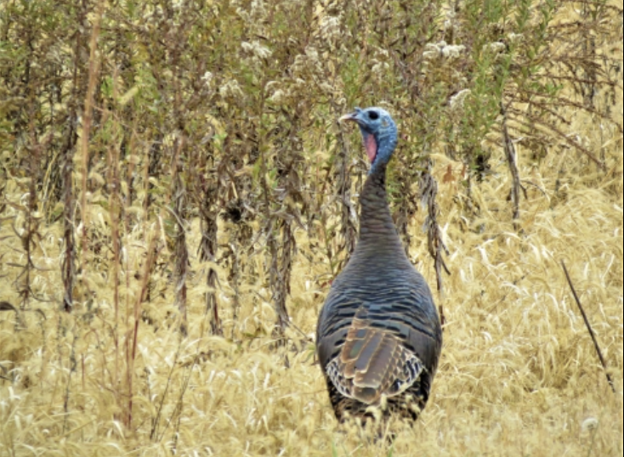
Big Oaks is known as a top tier hunting property, especially for wild turkey, but also for white-tailed deer and upland and small game. For Indiana, a Big Oaks deer tag is about the most coveted you can draw. On average, Hoosier hunters bag 35 gobblers a season on the property, and around 300-400 deer. This past turkey season, the property was not open for hunting due to a “strategic pause,” and public access has been delayed by 1 month (from April 15 to May 18) this year.
To access the property, visitors must go through a safety briefing and view a safety video and sign a safety form. This is necessary since parts of the property closed to public access contain unexploded munitions from its days as the Jefferson Proving Ground.
Up until this last year, Big Oaks was open to the public on Monday, Friday, and the 2nd and 4th Saturday between April thru November. Currently, it is open only on Mondays and Fridays. The regional office has also proposed reducing the 100 days that the refuge is open to hunting from 100 days to 1 youth deer weekend, 1 deer archery weekend, and 1 deer firearm weekend. While this would be a catastrophic blow to hunters, the closure of the property altogether would be a blow to the community, conservation, and all public land owners. We stand to lose 50,000 acres of contiguous hardwood and grassland habitat that supports a variety of wildlife. When we are talking Indiana public lands, this is second only to the Hoosier National Forest. 25,000 of those acres are open to hunting.
According to Big Oaks Conservation Society, closure of Big Oaks would result in the loss of:
· 5,000 public deer hunting days
· 2,000 public turkey hunting days
· 15,000 visitors, not only for hunting and fishing, but also school field trips, Outdoor Women at Big Oaks program, bird watching, hiking and “Take A Kid Fishing Days.”
According to U.S. Code 16, the federal code section dedicated to conservation and that governs the management of federal lands, the USFWS does not have the authority to divest of national wildlife refuges.
Not renewing the MOA, however, would constitute divesting the refuge. Renegotiating the MOA to exclude public access would be a blow to all public land users.
Compounding Issues
According to the National Wildlife Refuge Association, the Refuge System needs $2.2 billion to fulfill its conservation mission, but in FY2026 its funding sits as $522 million. At the beginning of 2025, the Refuge System had already seen a 30% loss of staff since 2010, but as of June 2025 an additional 20% of staff was lost due to resignations, firings, and retirements. No refuges in the U.S. are fully staffed, and more than half of refuges have zero staff on site. While DOGE and the current administration’s slashing of federal agency budgets is certainly a driving factor, both democrat and republican administrations have hacked away at the Refuge Systems budget over the years. In addition to these budget issues, volunteers provide free labor that is equal to 20% of the Refuge System workforce and account for over a million hours of work every year. Yet with the loss of staff who oversee volunteers, many are now turned away.
In addition to these staffing cuts, Department of Interior reorganization has led to the loss of specialists in the agency. For example, the US Wildland Fire Service (US WFS) was created in January of 2026. This centralized all federal wildland firefighting staff. While the intention of this move was perhaps to streamline firefighting efforts in the west, USFWS lost staff certified to do prescribed burns, as they are now with the US WFS. Big Oaks now has only 1 person certified to do prescribed burns (and there are 3 others who are employed at other NWR’s in Indiana), and it is unclear how US WFS will collaborate with, or if they will collaborate with, USFWS staff going forward.
Just this last spring, staff at Big Oaks burned 15k acres of productive grassland habitat. This kind of management is necessary for the abundant quail and woodcock and all grassland-dependent species, including the threatened Henslow’s sparrows as well as the state-endangered crawfish frog (aka, “Hoosier frog”), and well as white-tailed deer and turkey. This level of management is not feasible with the cuts and reorganization of federal staff.
Right now, there are many questions that remain unanswered for federal public lands staff. Will the US WFS have a presence on NWRs? Will they need an agreement with the army to continue work on properties like Big Oaks? Will they have to pay for prescribed burns? USFWS property managers themselves do not have answers to these questions.
Here are a few facts that frame the issue:
- USFWS is underfunded and under-staffed, and has been so historically, but in 2025 their operating budget was reduced by 20%
- Big Oaks, which up until last year had 5 employees, is down to 1 full-time employee
- It would cost $1 mil per acre to clear the live ordinances in the property’s secured area. So, the land is not developable, and it is also unusable by the army; the army cannot divest the property
- Big Oaks, per the Base Closure and Realignment Act of 1988 (the BRAC Deal), cannot be an active range again. The Army’s mission at Jefferson Proving Ground terminated in September 1995
- Given the munitions and the active Indiana Air National Guard range in the area, it is unlikely that the property could be transferred. The state DNR could enter into an agreement, which is possible, but not likely, given the Indiana DNR’s own budget woes
- The public has not been engaged on this issue. Pre-decision discussions are being carried out without public input.
In conclusion, while the outcome lingers down the road, one this is for certain, Indiana can’t stand to lose access to any public lands and waters! We will continue playing close attention to this issue and keep our members informed.
5404