FOR IMMEDIATE RELEASE
July 14, 2026
Contact:
Media@backcountryhunters.org
Backcountry Hunters & Anglers Calls for Facts Over Politics in Latest Public Lands Debate
BHA issues statement; urges fact-based conversations about wildlife, access, stewardship, and long-term management of our nation’s monuments.
MISSOULA, Mont.—Backcountry Hunters & Anglers (BHA) President & CEO, Ryan “Cal” Callaghan today offered the following statement in response to President Donald Trump's executive order reducing the boundaries of Bears Ears and Grand Staircase-Escalante national monuments in Utah by nearly 2.93 million acres:
“At Backcountry Hunters & Anglers, we’re serious about our public lands. The recent executive order to redraw the boundaries of Bears Ears and Grand Staircase Escalante national monuments, the public delivery of the order—and the inaccurate public statements used to justify it—shows a lack of seriousness from our administration. If you're changing how millions of acres are managed with zero opportunity for public input and serious on-the-ground implications, show us that the action is the result of thoughtful examination and not just another political jab. While modifying the current monument management plans may offer short-term benefits for select hunters and anglers—such as full-size vehicle access to derelict road systems—that ‘access’ can come at the cost of further limiting big game hunting opportunities and increased management costs. It also jeopardizes long-term protections that would ensure habitat health and connectivity, posing real, long-term consequences on the landscape. As for the near term, show us who's going to maintain roads, fight fires, restore watersheds, manage invasive weeds, and keep these places healthy amid year-over-year increases in public pressure and fewer staff working with fewer resources. The Antiquities Act has served presidents from both parties for more than a century. Like any conservation tool, it should be used thoughtfully and legally. But whatever path we choose, hunters and anglers deserve transparent, science-based management that leaves these places better than we found them,” said Callaghan.
The nonpartisan, North American public lands advocacy group is urging policymakers and the public to examine these decisions with the seriousness they deserve, relying on sound science, credible information, and careful consideration of their long-term impacts to our shared public lands legacy.
Callaghan’s statement on behalf of BHA is informed by firsthand stewardship of the very landscapes at the center of the debate.
Grounded in Stewardship
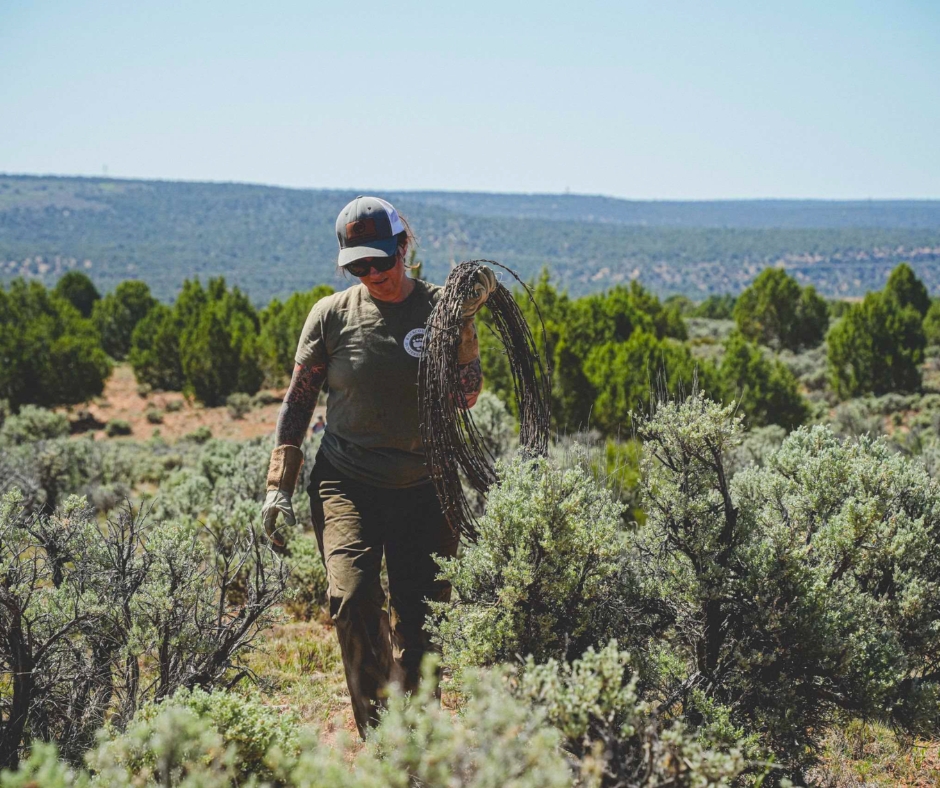
In 2024, BHA's Utah and Arizona chapters launched the multi-year Miles for Muleys initiative within Grand Staircase-Escalante National Monument, partnering with the Bureau of Land Management, Utah Division of Wildlife Resources, Mule Deer Foundation, Wildlands Network and Grand Staircase-Escalante Partners to improve one of the West's most important mule deer migration corridors. The project focuses on identifying and modifying wildlife barriers to improve passage for the Paunsaugunt mule deer herd—which migrates nearly 80 miles each year—as well as elk and other big game species. Volunteers are collecting field data, improving wildlife-friendly fencing, and monitoring how those restoration efforts affect wildlife movement over time giving BHA firsthand experience with the kind of long-term, collaborative stewardship healthy public lands require.
For BHA, that work underscores an important reality: conservation doesn't begin or end with a presidential proclamation. Long after the headlines fade, healthy wildlife populations still depend on intact habitat, science-based management, adequate staffing, and sustained investment on the ground.
"Conservation isn't something you declare—it's something you fund, staff, and carry out every single day," added Callaghan.
What Hunters & Anglers Deserve to Know
For hunters and anglers, yesterday's executive order raises practical questions that deserve clear answers.
BHA is asking whether staffing, funding and on-the-ground capacity will keep pace with today's realities. Public land visitation has increased dramatically over the past several decades, while many federal land management agencies face shrinking budgets, fewer personnel, and growing maintenance backlogs.
Likewise, if expanded road access becomes a management priority, BHA is asking how agencies will address the accompanying demands—including wildfire mitigation, erosion, invasive weeds, habitat restoration, law enforcement, and long-term maintenance.
For hunters and anglers, these aren't political questions. They're practical ones.
Healthy wildlife depends on healthy habitats. Responsible access depends on responsible management. Neither is possible without the people, funding, and long-term commitment required to steward these landscapes.
Backcountry Hunters & Anglers seeks to ensure North America’s outdoor heritage of hunting and fishing in a natural setting through education and work on behalf of wild public lands, waters, and wildlife. To learn more about issues important to BHA’s membership, visit https://www.backcountryhunters.org/get-involved/issues.
4430