By: Sarah M. Schuman
I fell in love with my husband in the Tongass National Forest and learned to hunt there.
I grew up in a no-gun household, and hunting was generally viewed as ethically wrong. Animals were considered sacred and should be left alone, though it was somehow acceptable to view them in captivity behind a concrete wall in a zoo, living in an artificial, man-made environment. On one of our first dates, my husband, Ryan, took me out to his favorite tidal bay to hunt on Kupreanof Island in Southeast AK. I had just finished reading Beyond Fair Chase: The Ethic and Tradition of Hunting by Jim Posewitz. Ryan gave me the book because, at the time, I viewed hunters as people who were primarily focused on killing an animal for sport.
We took a forest service road for about a mile and then stepped off the groomed path for another five miles to reach an open space that I can only describe as what I imagine the Christian version of Eden on Earth would look like.
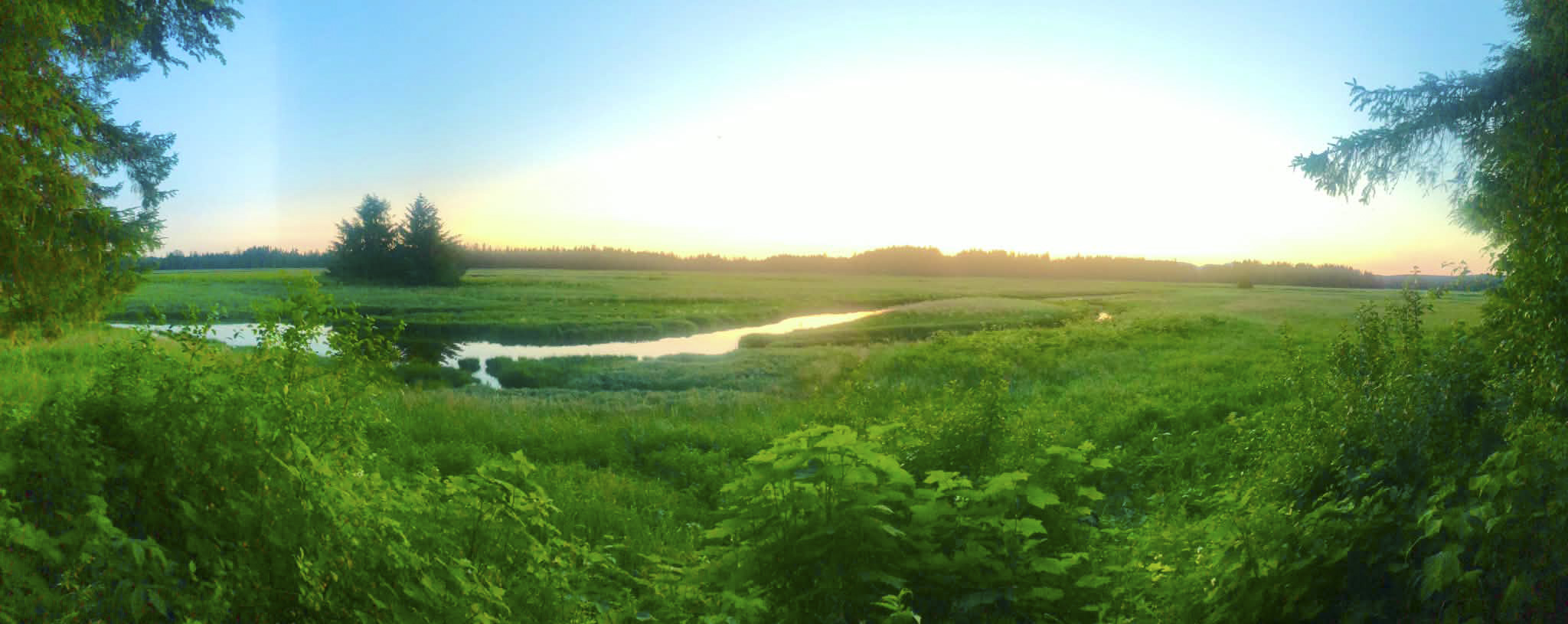
Because it is a temperate rainforest, the land is incredibly lush. On our way out, we passed a beaver who assertively slapped its tail to make sure we understood that we needed to stay away. We saw a fat, healthy porcupine with a rather large rumpus waddling away from us with such tempo that all I could think of was Shakira's song, "Hips Don't Lie." We also saw a few bears in the distance grazing on grass, gently swaying as they ate and occasionally rearing up on their hind legs to sniff a tree or some unusual smell—probably us.
That day, I was only an observer. I was curious about what hunting was really about, but nervous about watching the process. I was already enjoying myself because I had always perceived hunting as walking five steps into the woods, setting up a tree stand or blind, and sitting there all day, eating, and drinking beer. We didn't get that far into the marsh when a handsome buck appeared at the end of the wood line in front of us, grazing. Ryan asked me, "Are you gonna be okay with this?" as he raised his rifle. I nodded, and a shot rang out. The buck bolted.
Ryan told me we needed to look for blood spots on the grass so we could find where it had gone. This part instantly intrigued me. Within a few minutes, I found the blood trail and led Ryan to where the buck had fallen. It no longer felt like a solo activity where I was simply participating as an observer. Ryan pulled the buck away from the tree line and into an open area so we could spot any predators from a distance, in case they tried to claim the meat. Before cutting into the buck, Ryan knelt to thank the animal for the harvest it would provide. He spent time admiring its health and beauty. The only thing I could do was stare at the carcass in silence as Ryan began breaking the animal down with his knife.
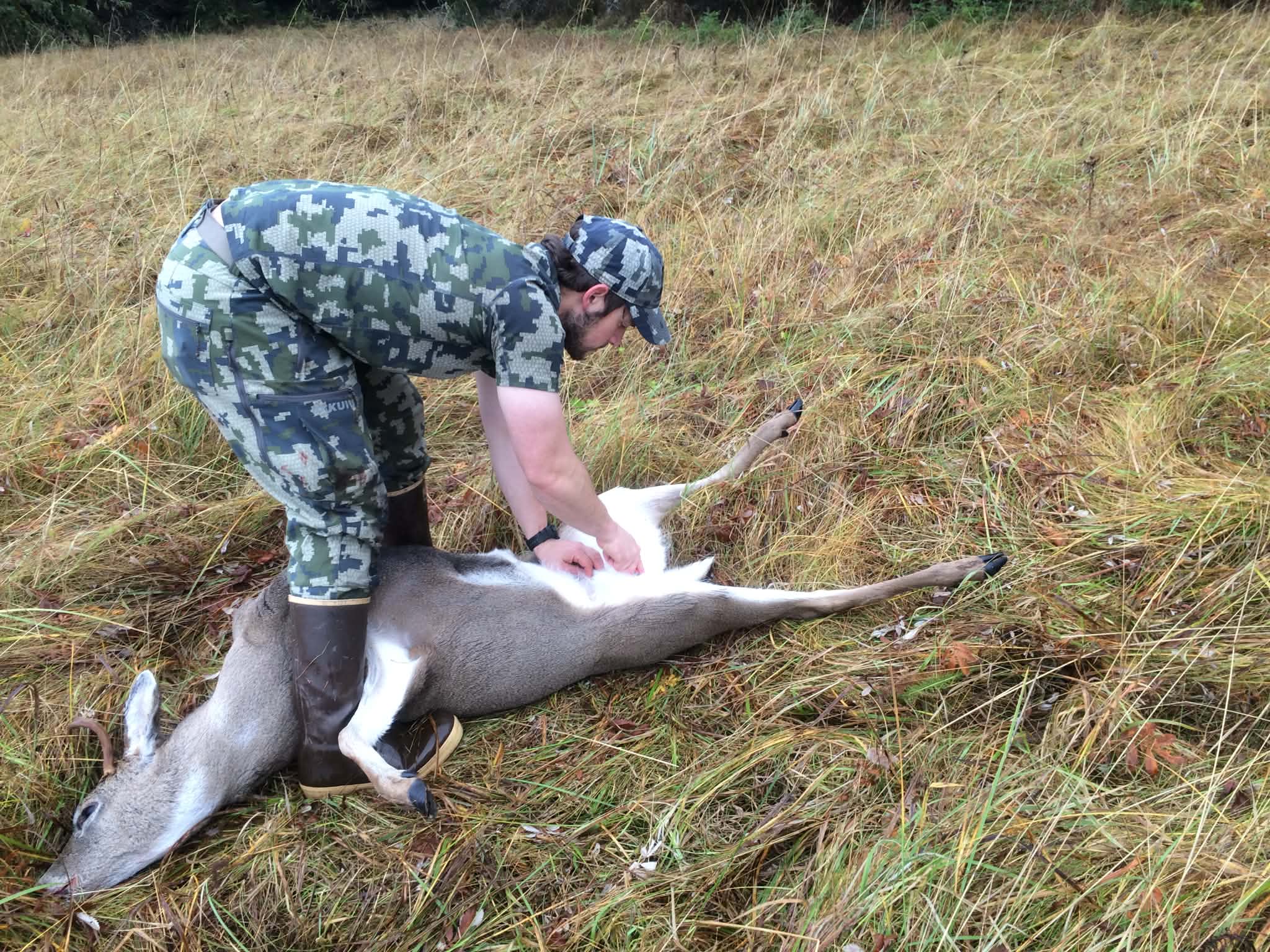
He looked at me and said, "I just lost you, didn't I?" He hadn't lost me. I was processing everything that had happened and realizing hunting was nothing as I had imagined. This was an experience unlike anything I had ever been exposed to. I realized that hunting wasn't about the kill shot. It was about the work leading up to that moment and the work that came afterward. The kill shot wasn't about taking a life for fun; it was about taking a life with conscious purpose and reverence, knowing that a life was being taken and honoring it. Ryan honored that buck by harvesting nearly every part of the deer, including the heart and liver, while leaving the intestines. In my mind, I reminded myself that this was also similar to how predators in the wild consume their prey—eating what they can and leaving behind bones and hide to be broken down further by the landscape.
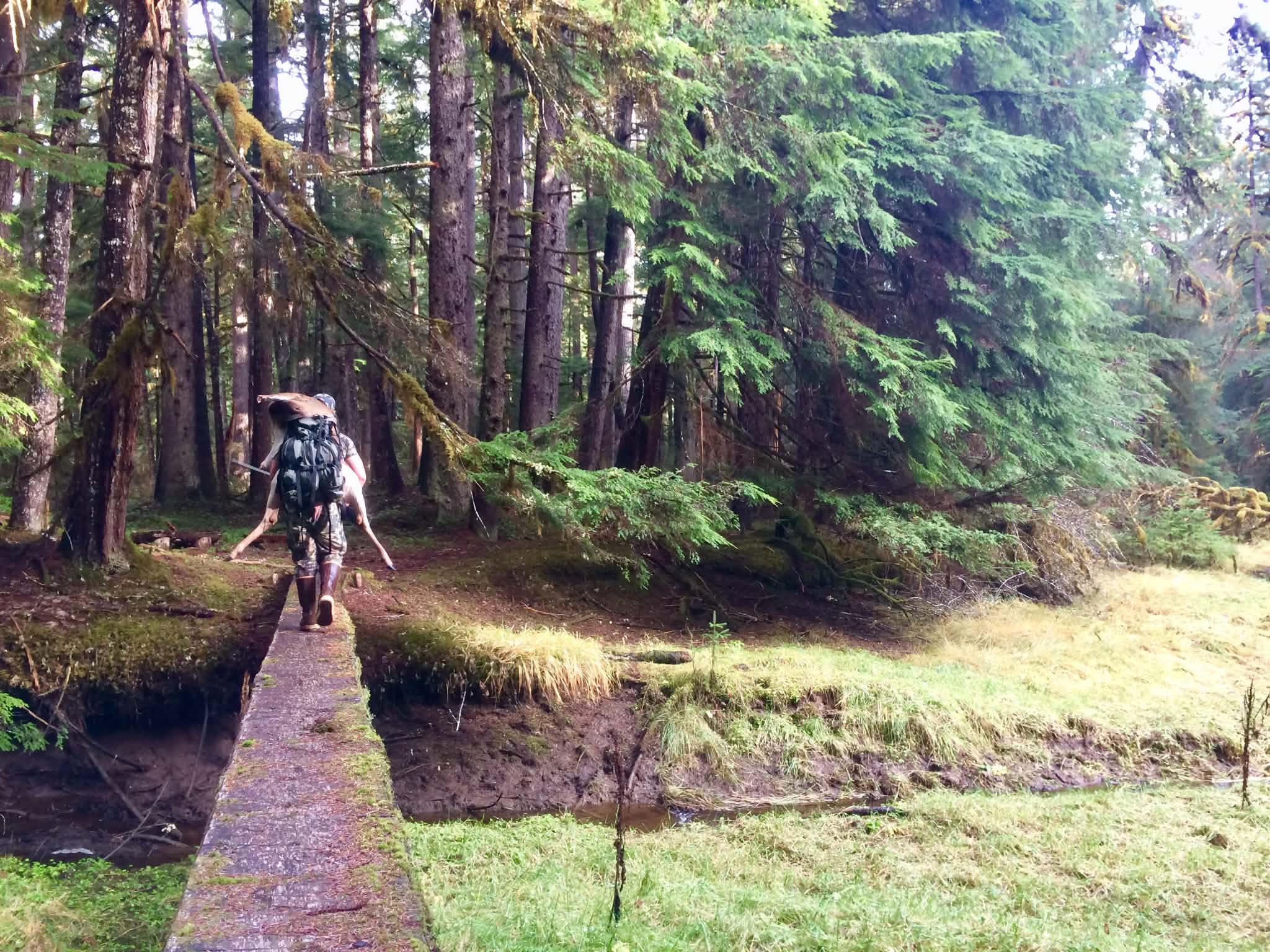
The Tongass is not only where I fell in love with my husband, reconsidered my ideas about hunting, and found a place to relax and recharge. It offers absolute solitude from the chaos and man-made conflicts of the world. It is one of the only places where I can truly feel free, unburdened by social rules and human noise. A place where I can go barefoot, wear no makeup, and be completely unbothered by voices chattering about the latest trendy indoor recreation center that “totally passes the vibe check”. Instead, it’s replaced with sounds of an owl hoot, duck calls, branches breaking, or the tail slap of that angry beaver. As someone who struggles with anxiety, crowds, and interpersonal interactions, the Tongass is exactly the type of medication that no man-made pill can provide: peace.
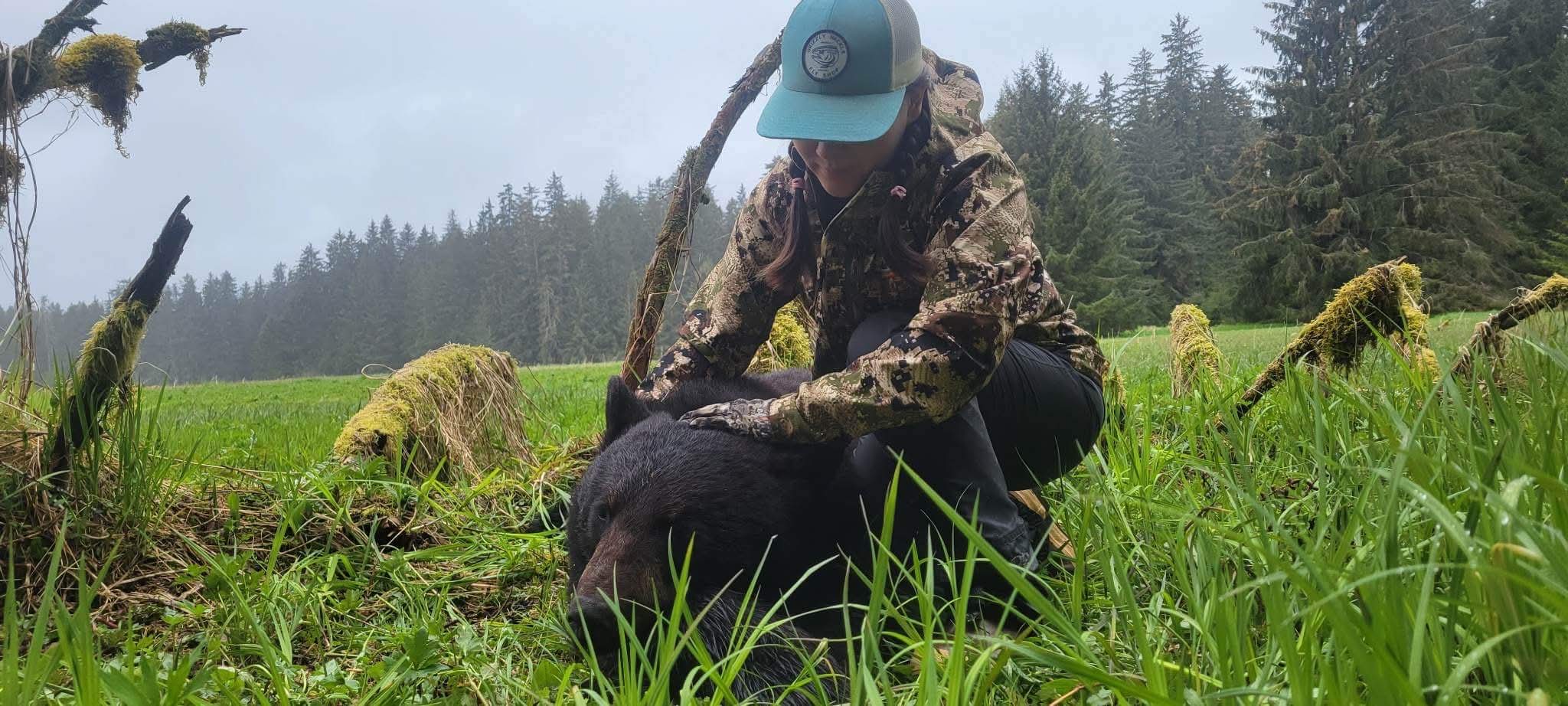
In 2023, I completed my first hunt, taking a healthy, young male black bear with a bit of his front nose missing from a previous dispute, in a nearby meadow not far from where Ryan took that buck. We then harvested the meat, and my homemade bear meatballs are now famous in our home. What began as an experience I was initially hesitant to understand had become something I now wanted to share with the people I loved.
In the future, I plan on taking my niece and nephew to the Tongass so they can experience the same curiosity, connection to the outdoors, and hunting tradition that have become so meaningful to me. If it is gone, access is limited, or the forest becomes increasingly commercialized for private use, they will be left with outdoor playgrounds filled with plastic and metal, with their feet squishing against foam instead of mud; wooden stationary blocks replacing handfuls of old man's beard or kelp; and no more sticks that come alive as wands, swords, or trekking poles. How will they experience walking five miles off trail into a natural paradise if all they can see is wood stumps from tree clearing and “Posted” signs telling them to keep out? Or, even worse, what happens when the new generation of "role models" sees the outdoors only as a backdrop for pictures rather than a place to experience? What if wilderness becomes a historical concept, rather than a reality we can all still enjoy, as is this nation’s legacy?
Further down the line, without conserving the Tongass, it may be replaced with a human-fashioned artificial environment, such as an indoor walking path with living trees, grass, and shrubs beneath a glass ceiling and controlled temperatures. The further we get from caring for and conserving places like the Tongass National Forest, the closer we move toward replacing it with the very man-made structures we put wild animals in and call safe, secure, and in their best interests.
For the benefit of all future generations, keep the Tongass wild, naked, and free.
68