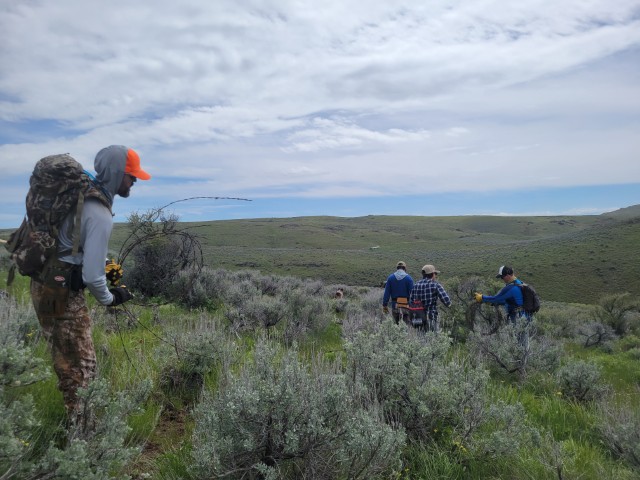
The Pony Creek fence was put in during the Reagan administration for grazing. The fence was completely rusted and, on the ground, wooden posts rotted away and often buried under the sandy soil.
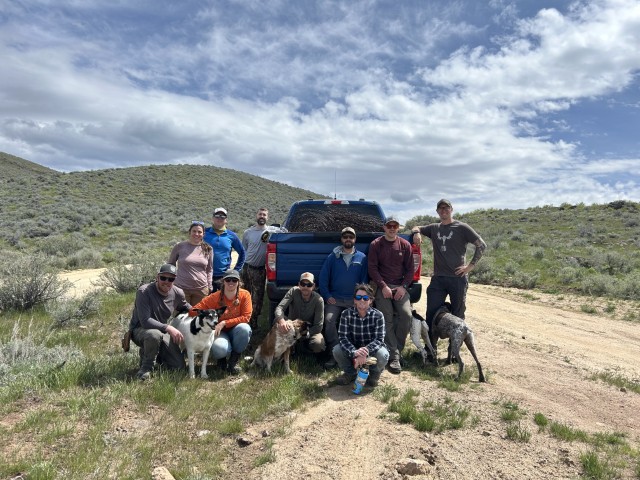
Last weekend, April 25th, 9 BHA volunteers removed 1 mile of the old fence. This was the final workday out at Pony Creek. Our BLM contact for the project, Austin Welke, was on site for the removal and was happy to see this one go. Austin and Idaho’s AFI Liaison Hunter Whitten started working on the project two years ago, after Fish and Game volunteers had identified it for removal.
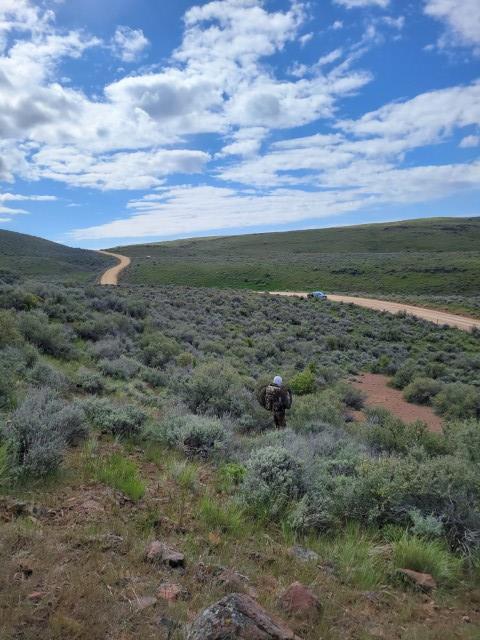
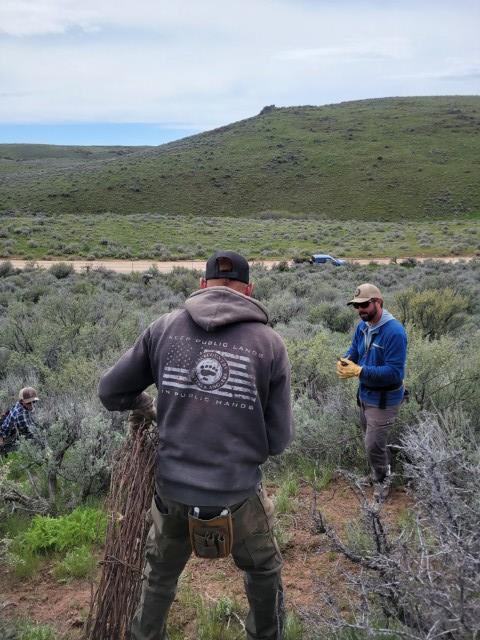
The team got to work Saturday morning with a cold and windy start. Once we hiked up the steep hill to get to the old fence everyone was warmed up and ready to start. The work was steep and spanned multiple draws which made for difficult pack trips with bundles of wire. The group made quick work of the old wire hand rolling it up while moving strategically down the hill. It was difficult at times since the fence was either buried under soil or had been grown over by now mature sagebrush or bitterbrush. By the time we broke for lunch most of the fence was out and in the back of the BLM work truck. After burritos, snacks, and a quick BOGS Boots raffle, we finished out the reminder of the fence as one big group. An hour later the entirety of the old material was packed away ready for the scrap yard, a job well done!
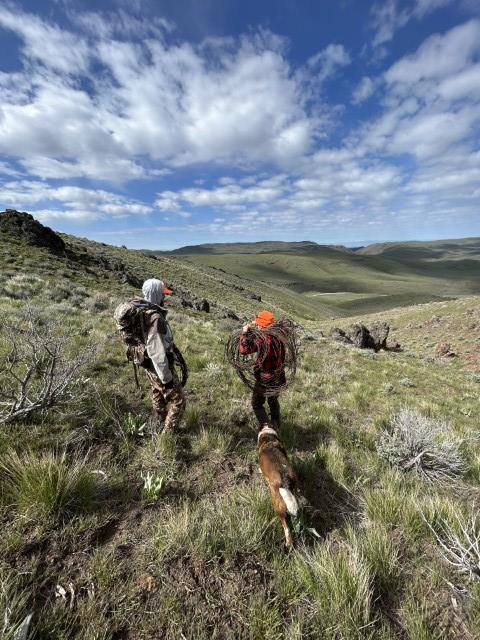
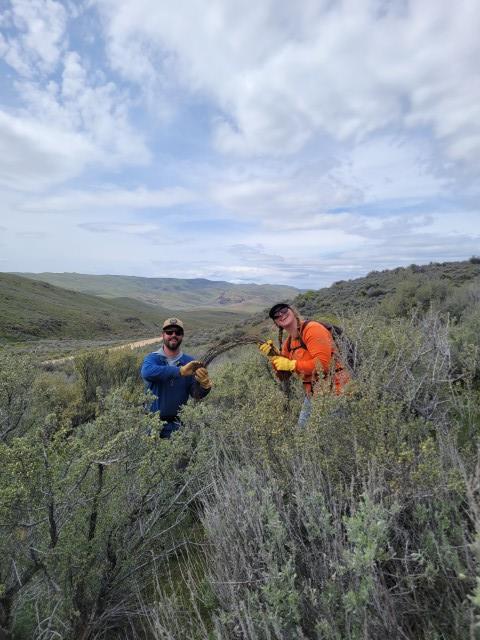
This area is part of the Bennett-Teapot Dome migration corridor. Mule deer and elk utilize this area to migrate from high mountains into winter range like where this fence was located. According to Idaho Fish and Game the average distance an elk travels in this route is 41.9 miles and 38.5 miles for mule deer. By removing fences in winter range, we can reduce animals being entangled or wasting vital energy crossing fences. This area still has some prime winter forage with mature native shrubs and bunch grasses. It has seen its fair share of destructive fires, establishment of invasive species, and animal vehicle collisions along Highway 20. Anything we can do to make it easier for these migrating animals is a win.
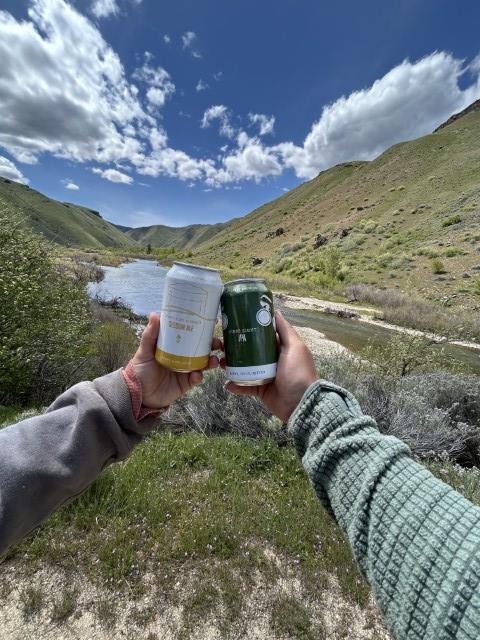
Back at camp along the South Fork of the Boise River volunteers enjoyed winding down the chilly evening by the campfire. Wild game potluck with fresh spring perch chowder, venison chilindron, and all the sides. Delicious libations were supplied by Lost Grove Brewing in Boise.
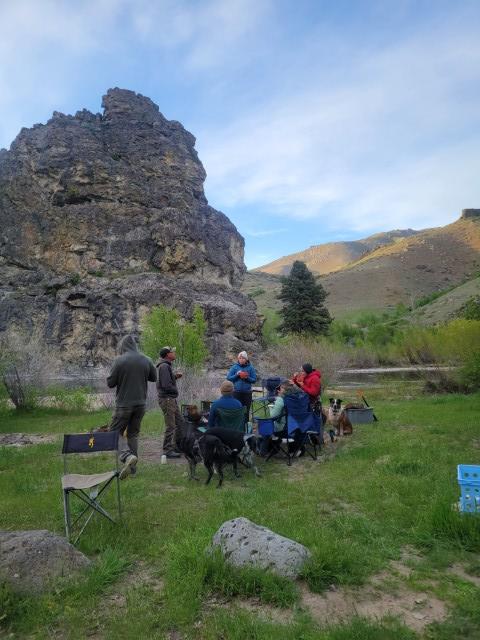
The following morning was excellent bird watching with tons of species observed or heard. Most notably a great horned owl nesting directly across the river high in the cliffs with two fluffy owlets, we were lucky enough to watch them from a spotting scope with coffee in hand.
This was an enjoyable weekend! The group worked hard to complete the project on Saturday and enjoyed some downtime at camp along the river. Enjoying Idaho’s public lands while feeling good about a day’s work to improve wildlife habitat, what could be better for a beautiful spring weekend! Thank you to all the volunteers who took time to be out at the event last weekend.
If you haven’t had the opportunity to attend a BHA event this year consider finding one in your local area, BHA events page.
And if you aren’t a member of BHA, consider joining!
663