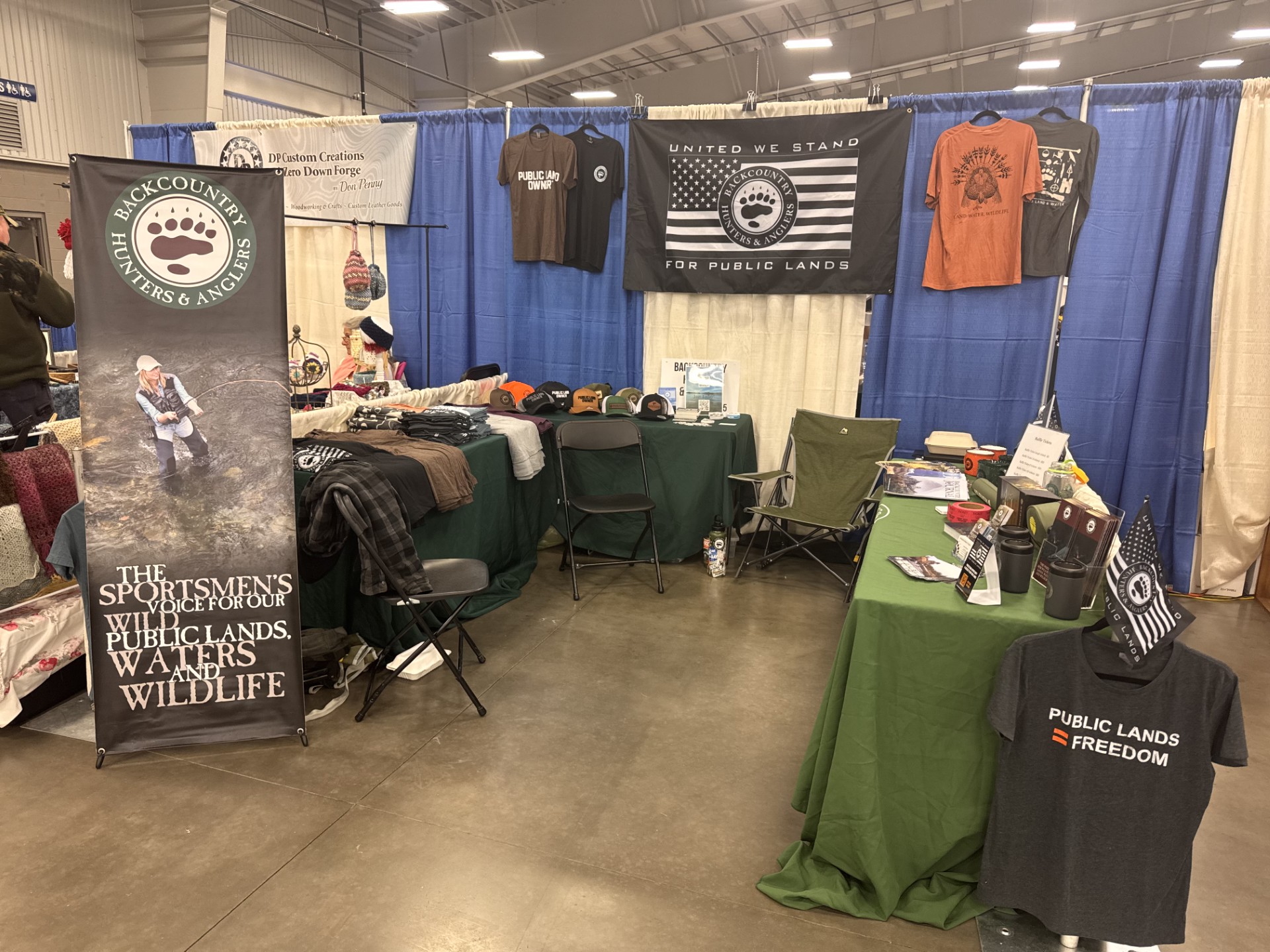
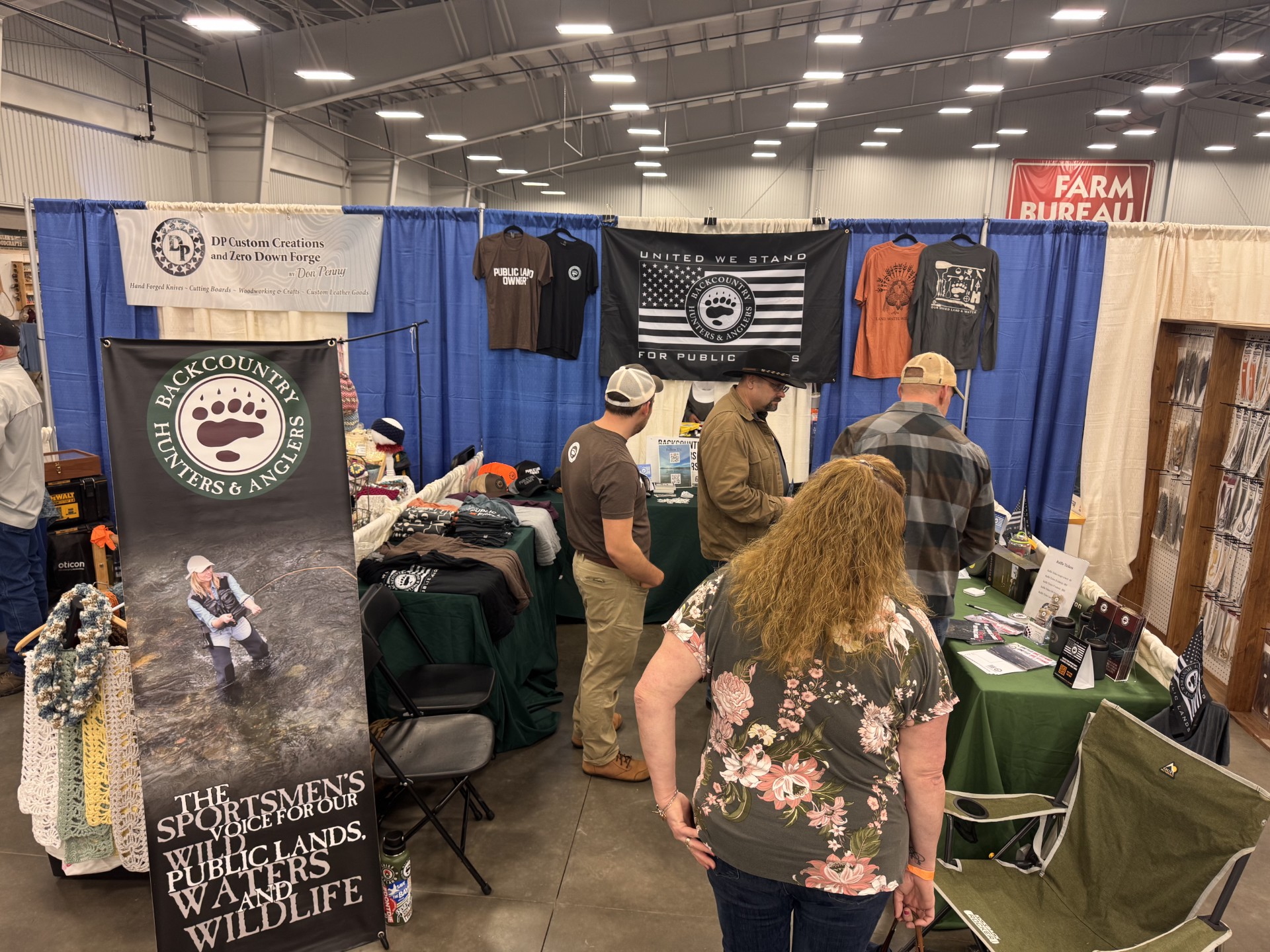
 Every January, the Mid-Atlantic Chapter of Backcountry Hunters & Anglers (BHA) shows up as an exhibitor at the annual Virginia Fly Fishing and Wine Festival. It is a welcoming, beginner-friendly event that reliably draws anglers, outdoor families, and conservation-minded Virginians. For our chapter, it has also become a dependable start-of-season gathering point, a chance to reconnect with familiar faces in the fly-fishing industry and the conservation nonprofit community, and a chance to meet new mission partners who care about clean water, healthy habitat, and keeping access open.
Industry relationships matter, and so do nonprofit partnerships. Many of us have come to know each other over the years, and there is real value in the simple act of being present, swapping updates, comparing notes on current challenges, and finding practical ways to collaborate. But the best part of the weekend is always the public engagement. A booth is a small footprint, but it creates a powerful space for conversation. Over the course of the festival, we meet new folks who are curious about BHA’s work, and we get to talk face-to-face with existing members who rarely get an in-person opportunity to share what they are seeing, what they care about, and what they want from their organization.
This year, those conversations took a noticeable turn.
All weekend, people stepped up and asked about BHA’s United We Stand for Public Lands campaign, what it is, and what BHA is doing to counter ongoing efforts to sell off America’s public lands. Some visitors wanted context. Others came with urgency, having followed headlines, podcasts, or social media and wanting to know what was happening behind the scenes. Many asked the same practical question in different ways: “What can I do that actually helps?”
Just as importantly, many chose to act right there at the table. We saw people renew memberships. We met first-time members who decided that BHA’s work aligned with their values and wanted to add their names and support to a growing community. Those moments are encouraging, not because a single membership is a magic wand, but because they reflect something bigger: people understand that access, habitat, and the future of hunting and fishing are inseparable from policy decisions, and they are ready to participate.
 BHA’s United We Stand campaign did not appear out of thin air. It was a direct response to efforts in Congress that would have authorized large-scale sales of federal public lands through budget legislation. Along the way, BHA and its members made real progress. The organization has shared updates on key developments, including the removal of major land-sale language from the House version of the bill, and the continued need for vigilance as similar proposals can reappear quickly in new forms. If you want to read more about how this unfolded and why it matters, BHA has documented the timeline and key moments through multiple posts, including coverage of the initial push to sell public lands, the public response, and subsequent developments:
A fair question I heard at the festival was: “Isn’t this mostly a Western issue?”
It is true that many of the highest-profile public lands debates tend to center on Western states, in part because they contain large blocks of federal land. But reducing this to a regional concern misses the reality of how federal decisions work and what is at stake. Public lands and waters are a national inheritance, and the people who make decisions about them represent the entire country. Every senator and every representative has a vote on federal legislation that can affect public lands, waters, and wildlife. That means Virginians, Floridians, Coloradans, and Wyomingites all have both a stake and a role, regardless of where the maps place the biggest acreage numbers.
It also misses a deeper truth that came through clearly at the festival: hunters and anglers may pursue different species in different landscapes, but we are connected by shared values. We want access that remains access. We want fishable water that stays fishable. We want wildlife habitat managed for the long term. BHA’s mission and values are grounded in ensuring North America’s hunting and angling heritage in a natural setting through education and work on behalf of wild public lands, waters, and wildlife, and that mission does not stop at any state line.
From a nonprofit standpoint, it is also worth saying plainly that BHA is nonpartisan. This is not about political parties or candidates. It is about ensuring that the places that belong to all Americans remain in public hands and are managed responsibly for the long term. People from every background can find common ground there.
So, what can an individual do?
Here is what I shared at the booth, and what the festival reaffirmed for me:
- Stay informed, then stay engaged. The details change quickly, but the principle stays the same: public lands should remain in public hands.
- Use your voice in a credible, consistent way. Personalized messages, respectful tone, and persistence matter. When action alerts are live, BHA’s Take Action tools make it easy to weigh in.
- Bring others with you. Conservation outcomes improve when more people participate. Membership, local chapter events, and simple conversations with friends all compound over time.
- Show up where the public is. Festivals like this are not just a fun weekend, they are civic space. They are where people learn what is happening and decide whether they will participate.
The Virginia Fly Fishing and Wine Festival reminded me that conservation is not only built in committee rooms or court filings, and it is not only fought through headlines. It is also built across folding tables, between fly boxes and maps, one conversation at a time. When members and newcomers walk up and say, “I’m paying attention, and I want to help,” that is the sound of a grassroots community doing what it is supposed to do.
And it is exactly why we keep showing up.
944