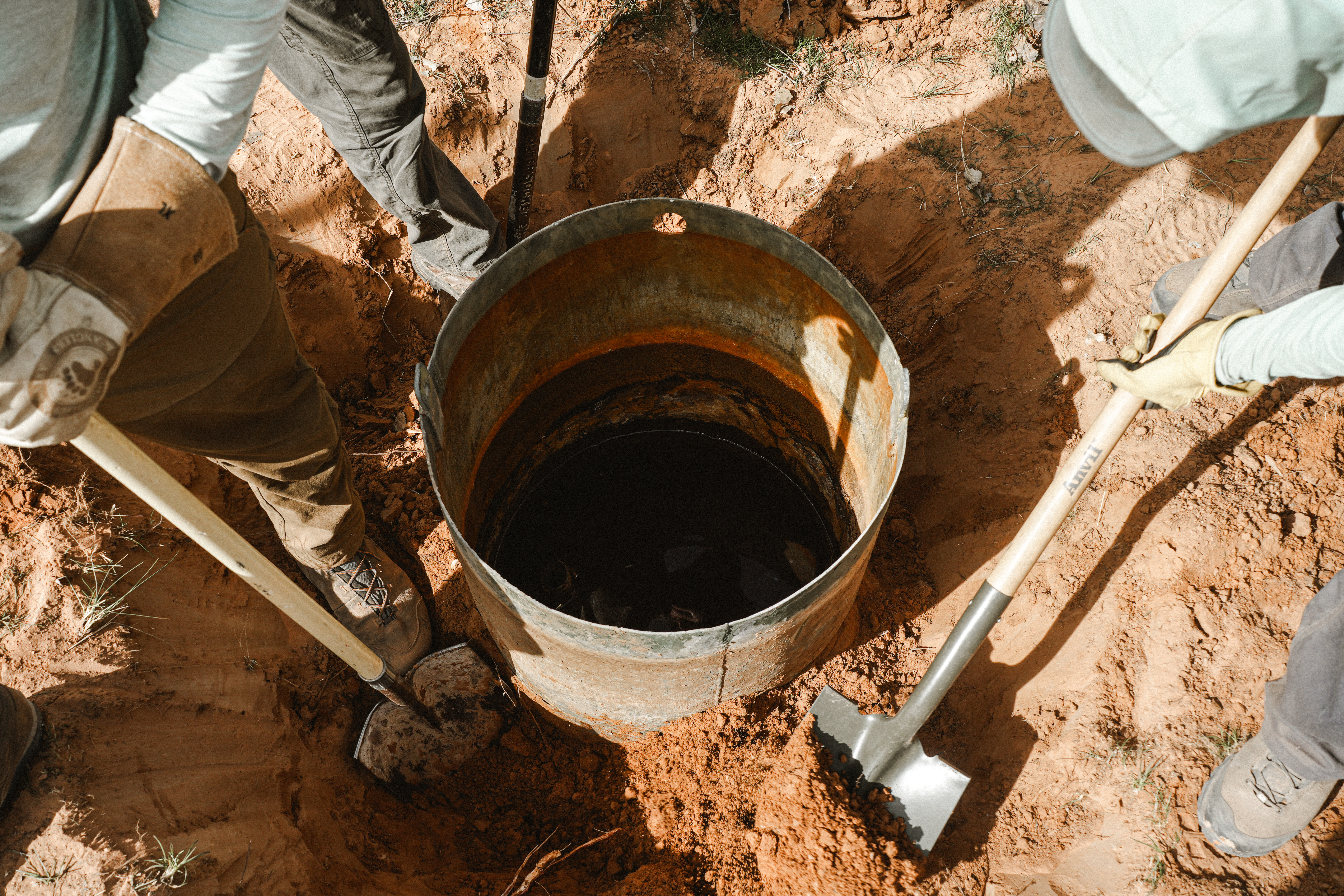
The Dolores Triangle is a remote section of Utah that is defined by the Colorado and Dolores rivers. It is an important winter range for mule deer that spend their summers up on the Uncompahgre Plateau in Colorado. The country is full of cryptobiotic soil, slick rock, rock art and lush drainages with springs. Amongst these slick rock canyons lie lush riparian areas that support a variety of life. Mule deer are attracted to them for the browse and water. Buckhorn springs was originally tapped with piping and led into troughs for sheep. Later the area was fenced off with 6 strands of barbed wire to keep livestock out. Six strands not only keeps out livestock, but wildlife as well.
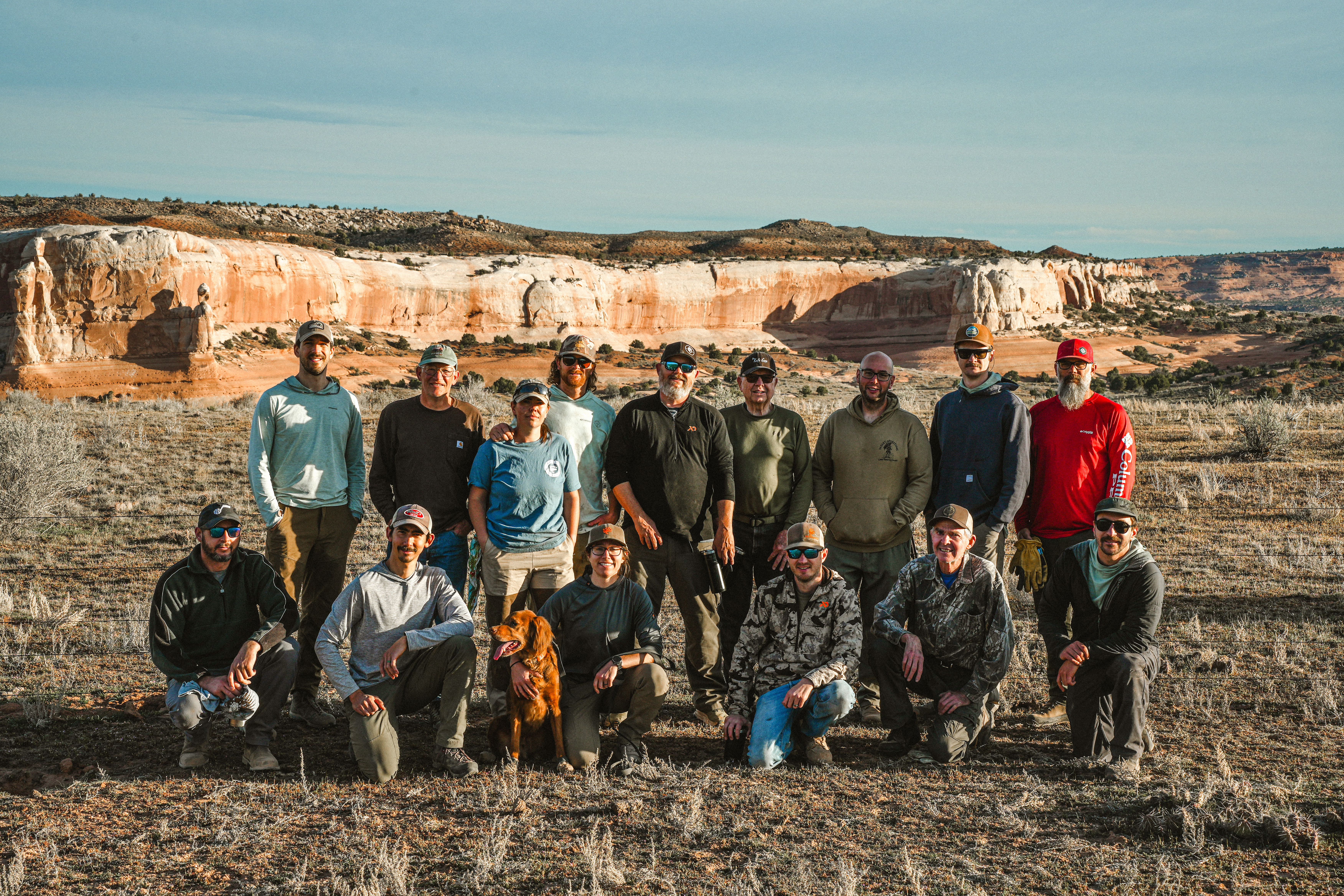
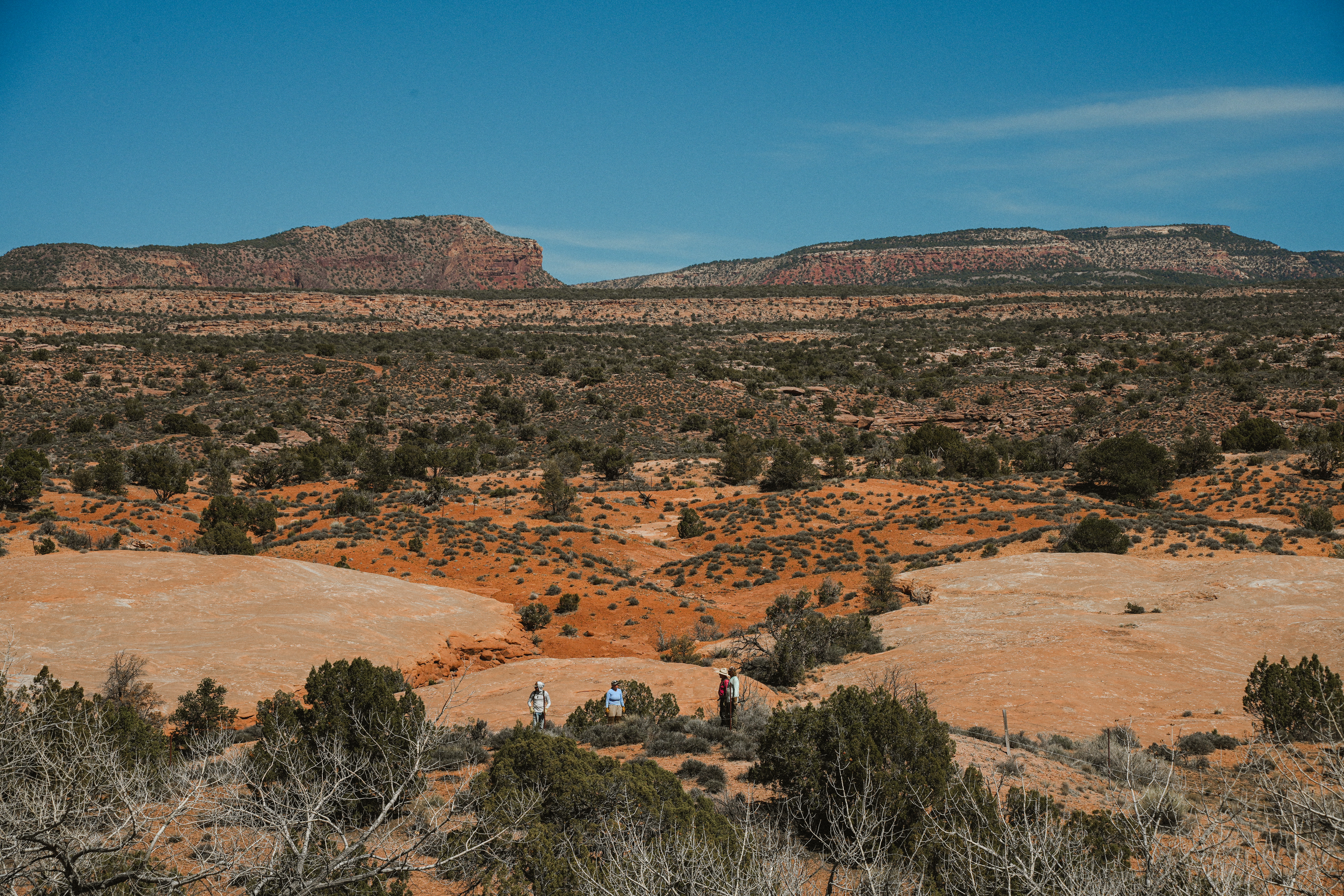
This section of BLM land is remote and hard to get to. Coming from Moab you must ford the Dolores River, in a winter like Utah had it was uncommonly low and easy passable. Most volunteers made the 45 mile drive in from Grand Junction, CO. 15 BHA volunteers made it out to help modify the .33 mile enclosure around Buckhorn Spring. Jonathan “Yoni” Argov, the Moab BLM wildlife biologist, sourced the project and joined us in the field.
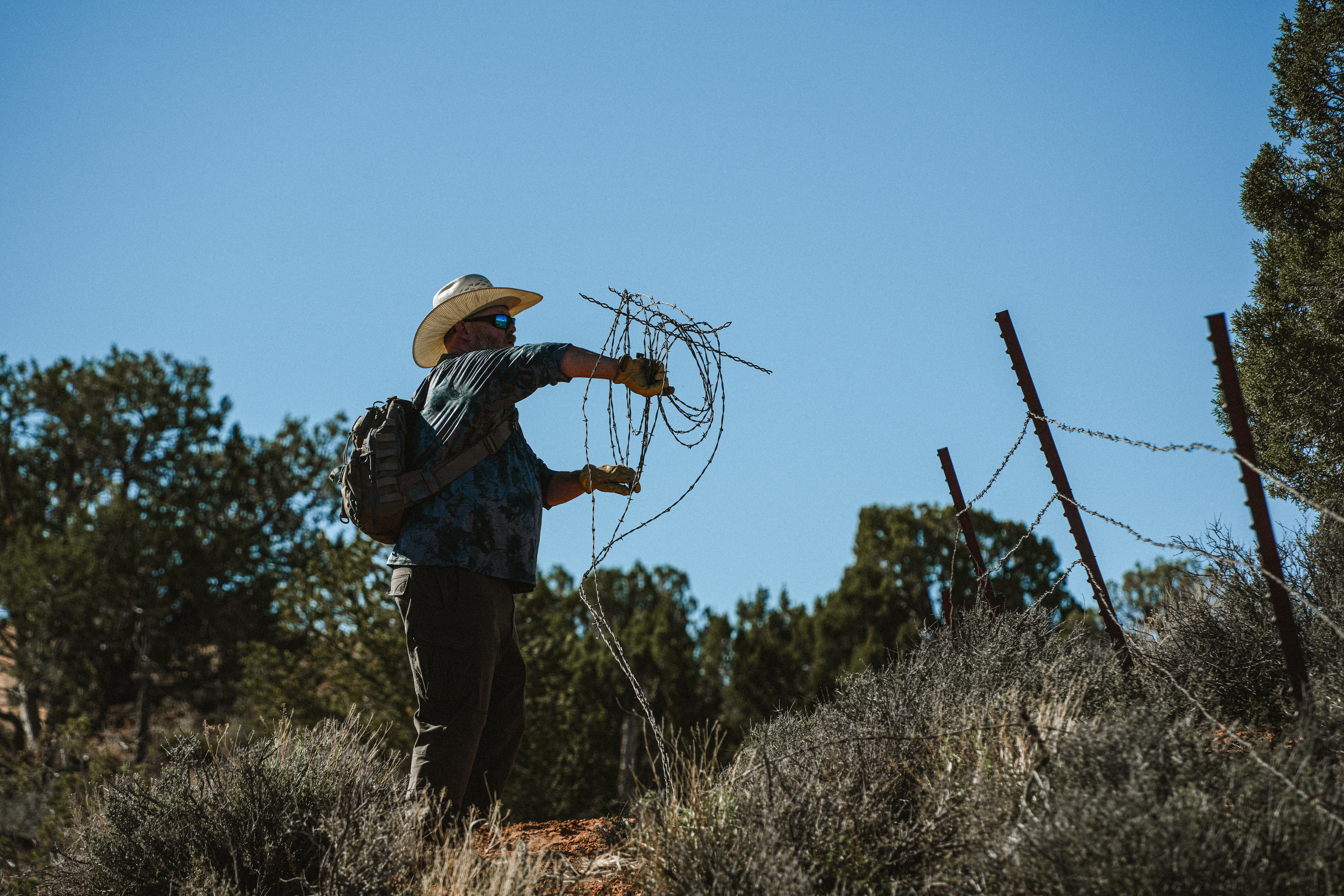
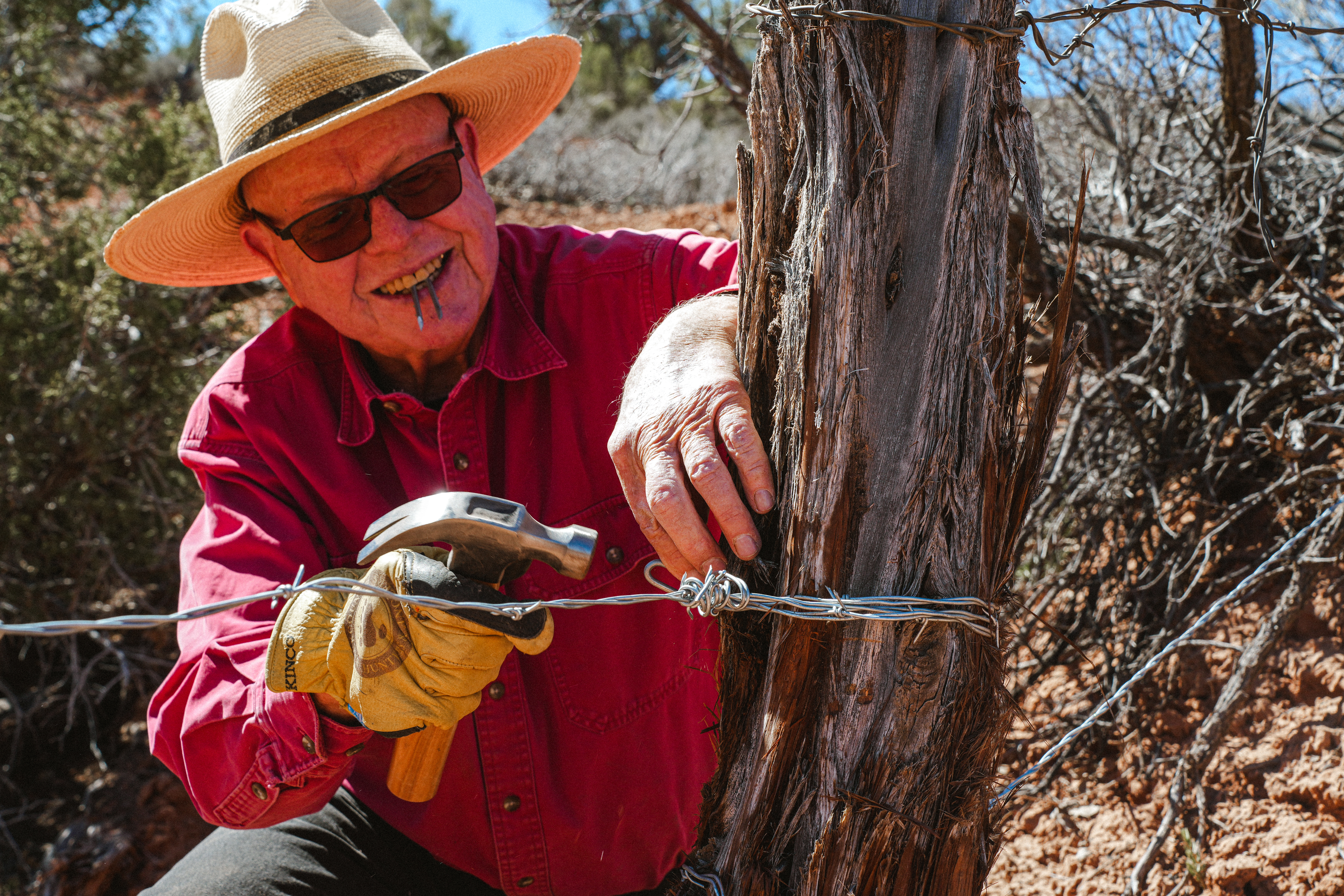
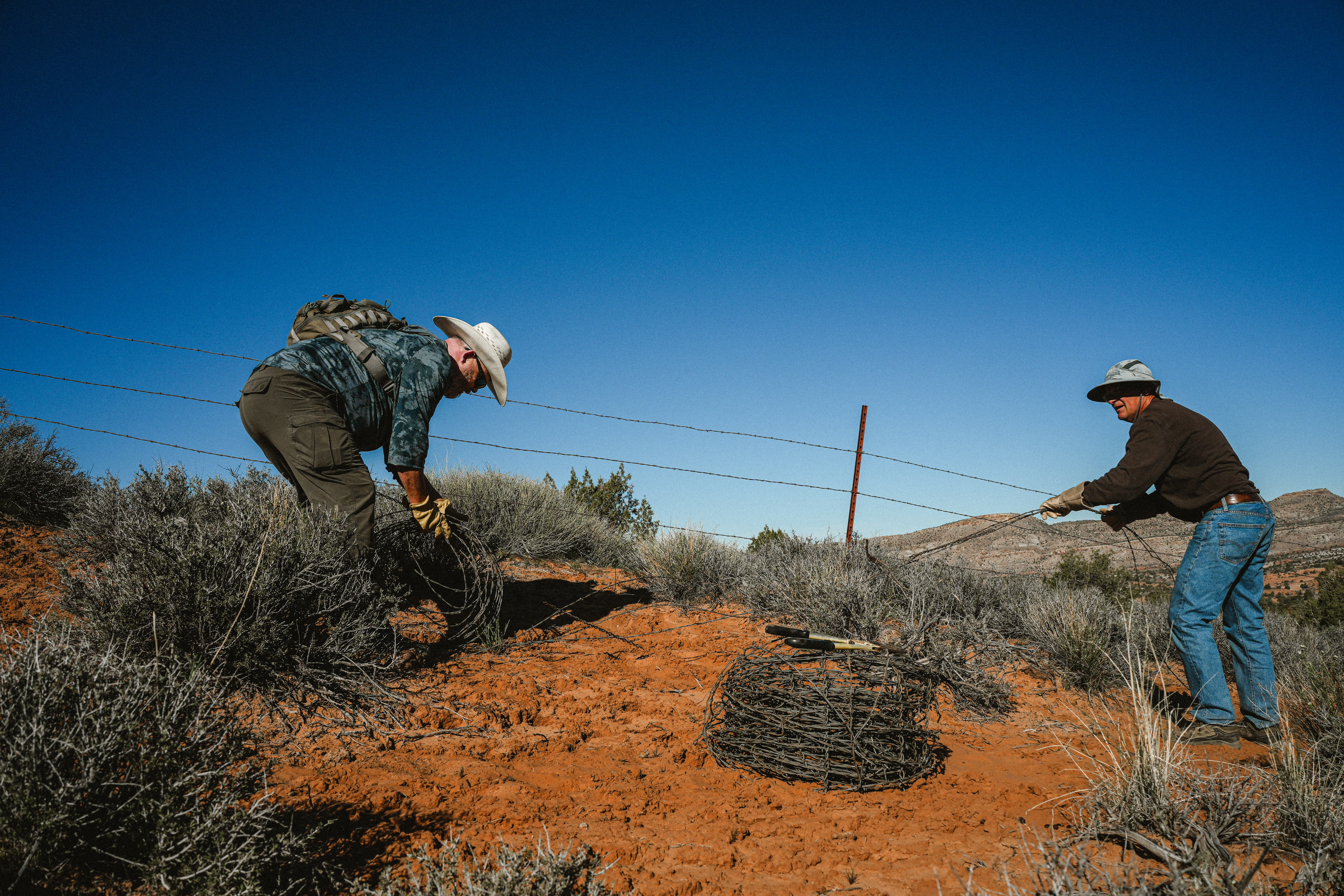
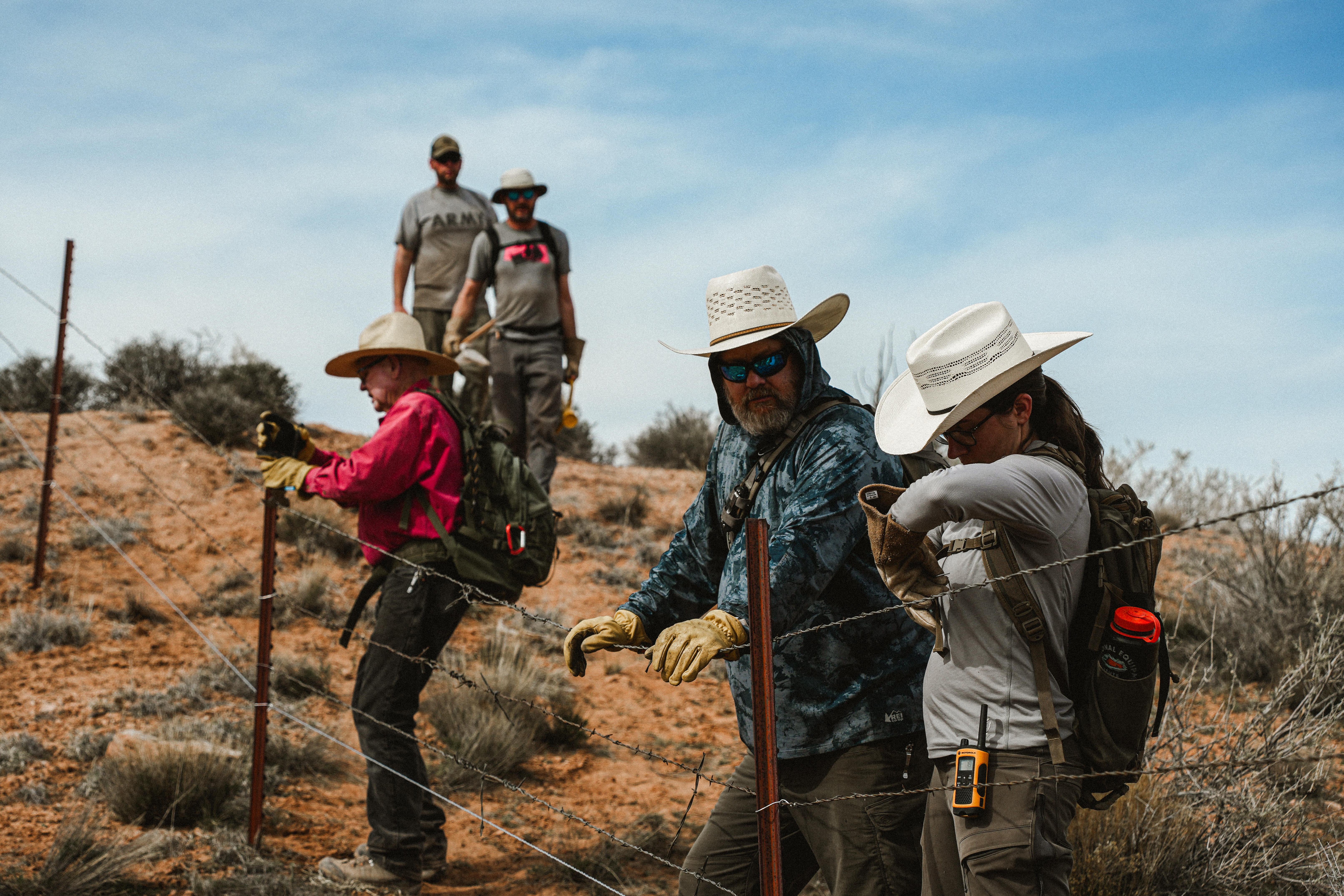
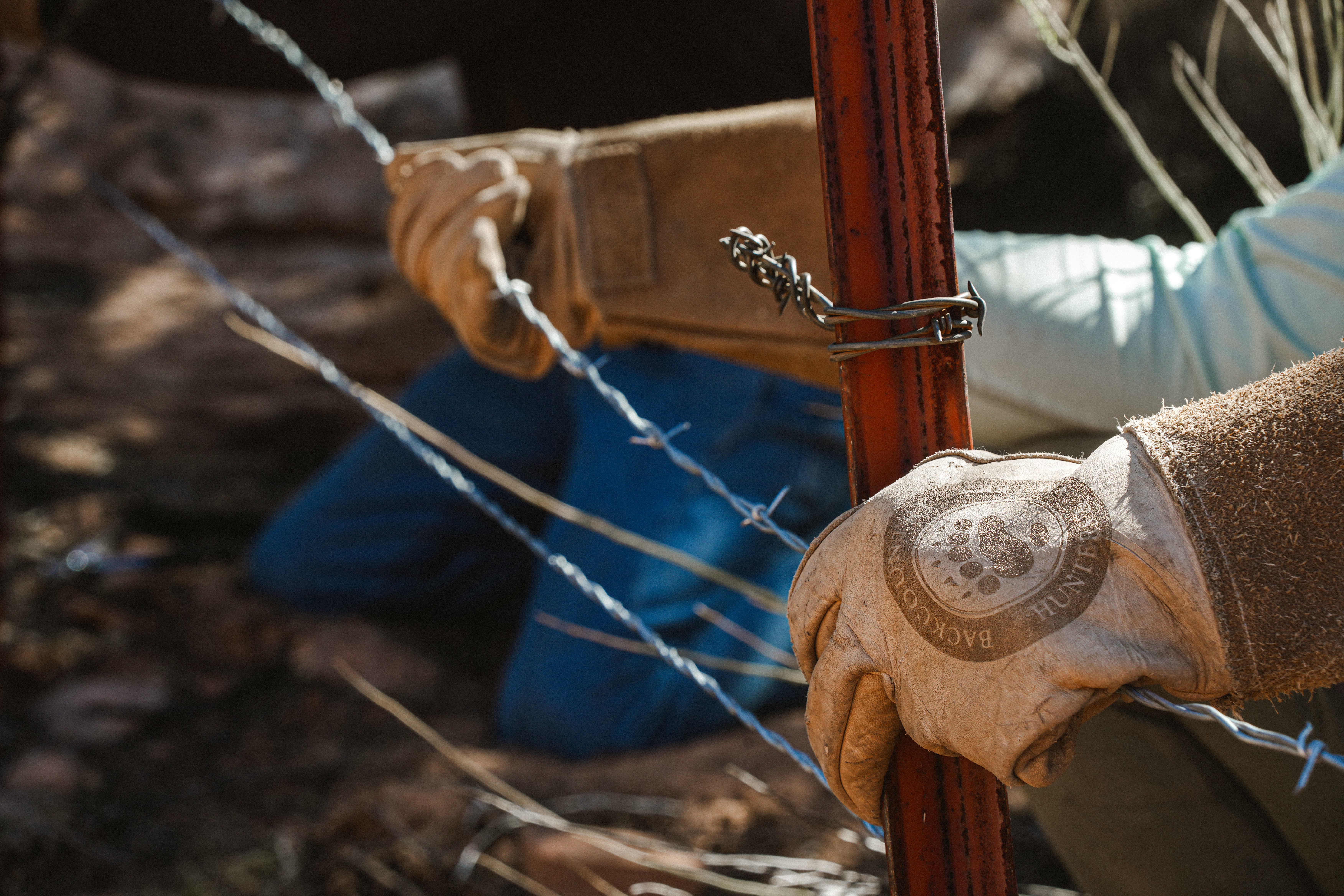
Most stewardship fencing events involve giving volunteers a quick briefing on how we will remove the fence and how far we are going, resulting in everyone having similar jobs. This project was more technical. We had to remove 3 bottom barbed strands, replace with a smooth strand, and then remove and stretch the top 3 wires. In order for a fence to be wildlife friendly there must be a smooth wire 16”-18” off the ground. This makes it easier for deer and fawns to pass under. It’s also important that the fence be tight and have a 12” spacing between the top two strands. This prevents deer or elk’s legs from becoming entangled in the top two wires. Volunteers broke into groups to tackle the task of modification. Wire had to be removed, re-stretched, attached, h-braces re-built, new t-posts installed, and old wire transported to the staging area. Two areas had been washed out by flash floods and needed rebuilding. Thanks to our event sponsor, Rocky Talkie, we were able to easily communicate and one lucky volunteer won pair of radios.
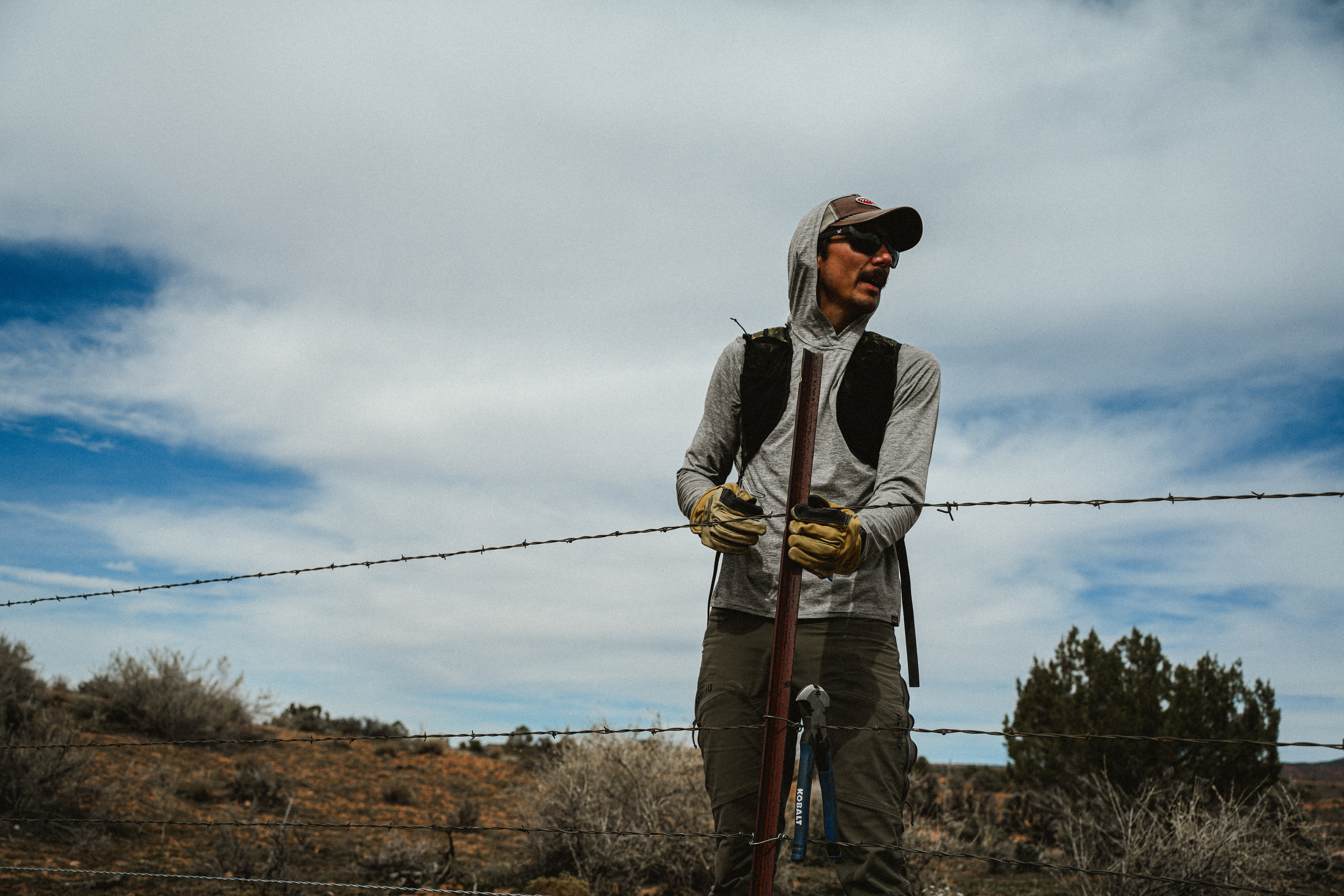
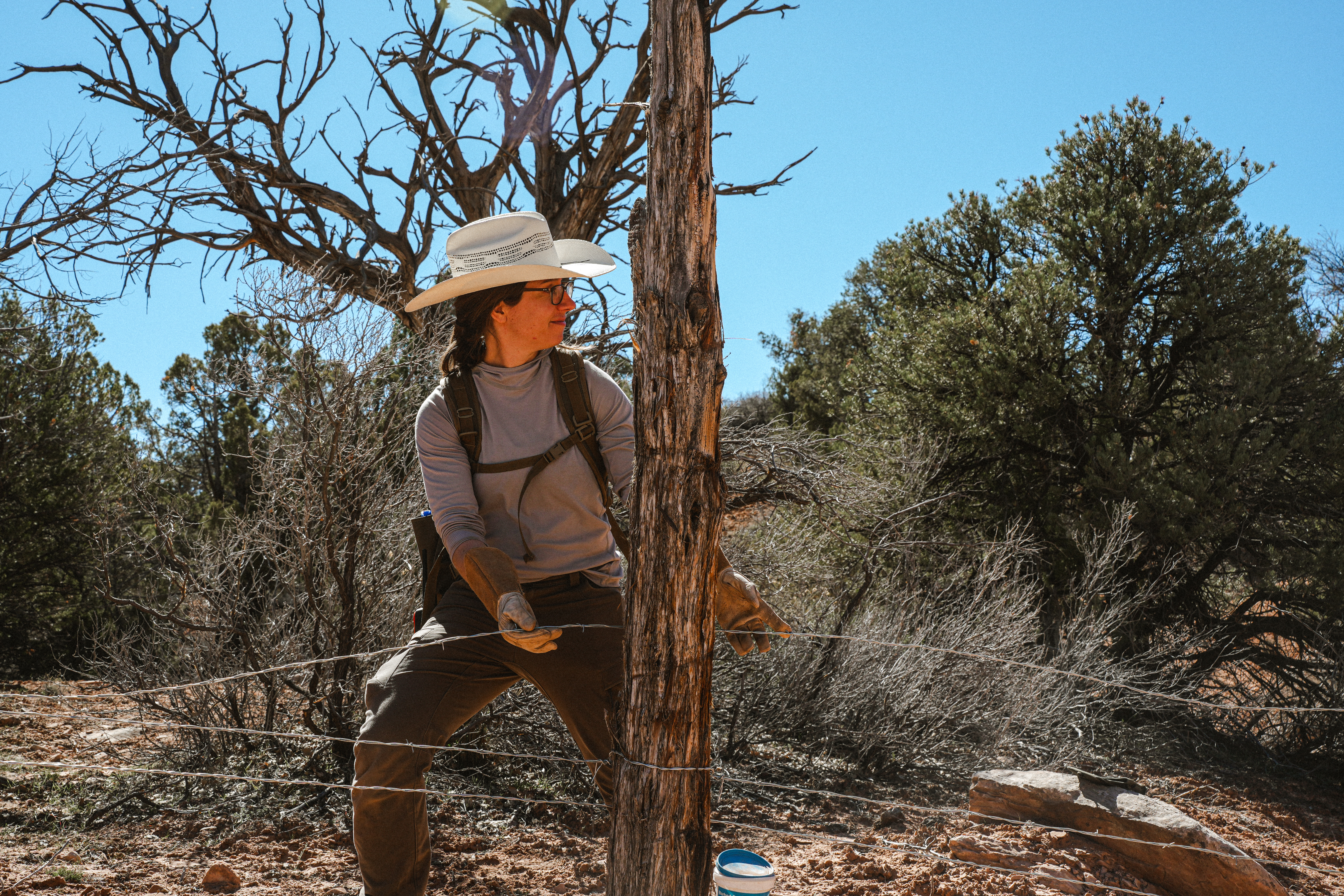
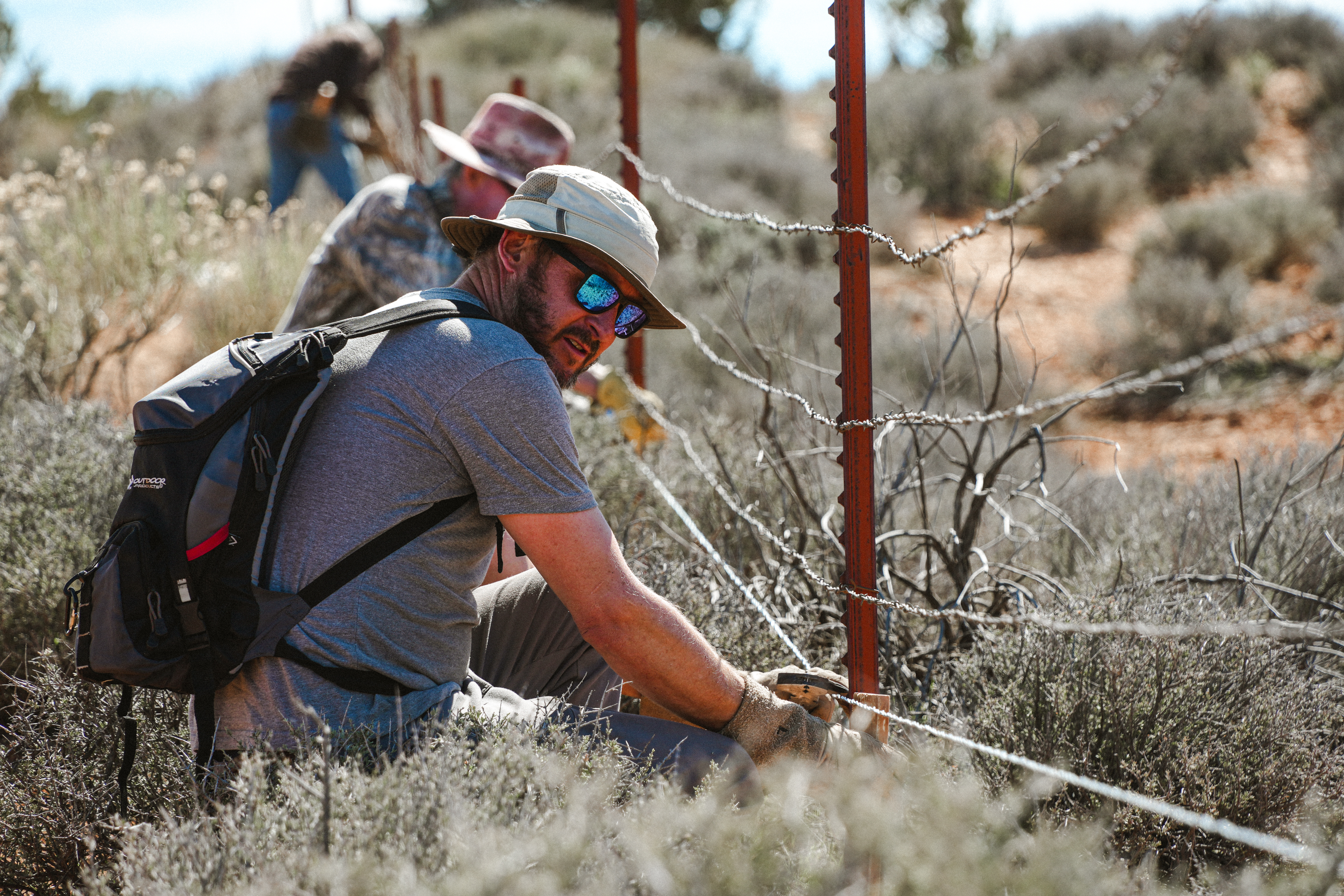
Most of the fence was modified on Saturday, but a 1/2 day of work was needed on Sunday to finish off the project. In the end, .33 miles of fencing was modified and the spring was restored to its natural state. As a result of this work, connectivity was improved on a 9,000 acre allotment, making it easier for wildlife to access the spring.
Back at camp the wild game potluck was a huge hit. On the menu was jackrabbit tacos and chili verde, elk sliders, moose steaks, elk bratwursts, and even a salad. In good UT BHA tradition we shot .22’s and bows before dinner.
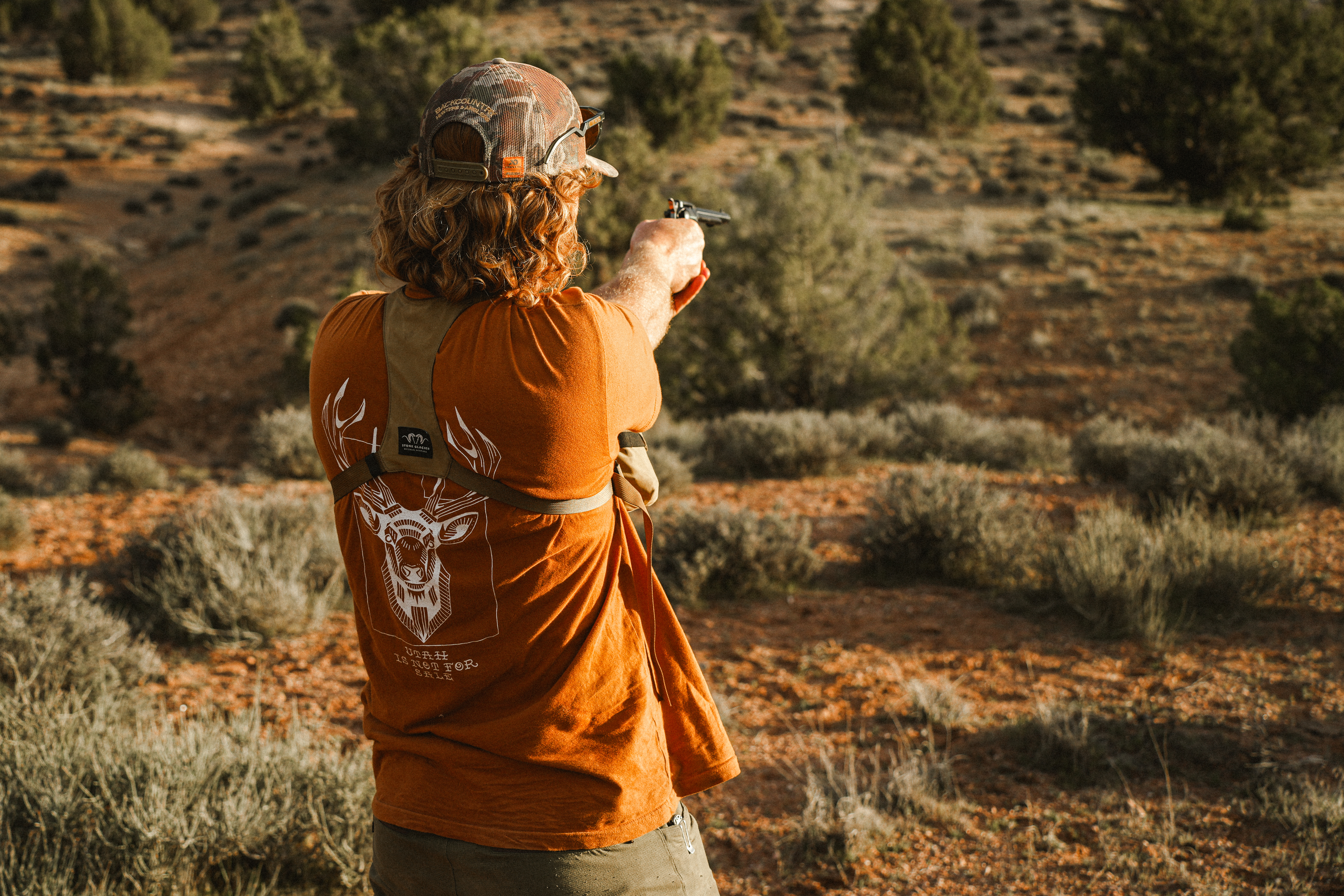
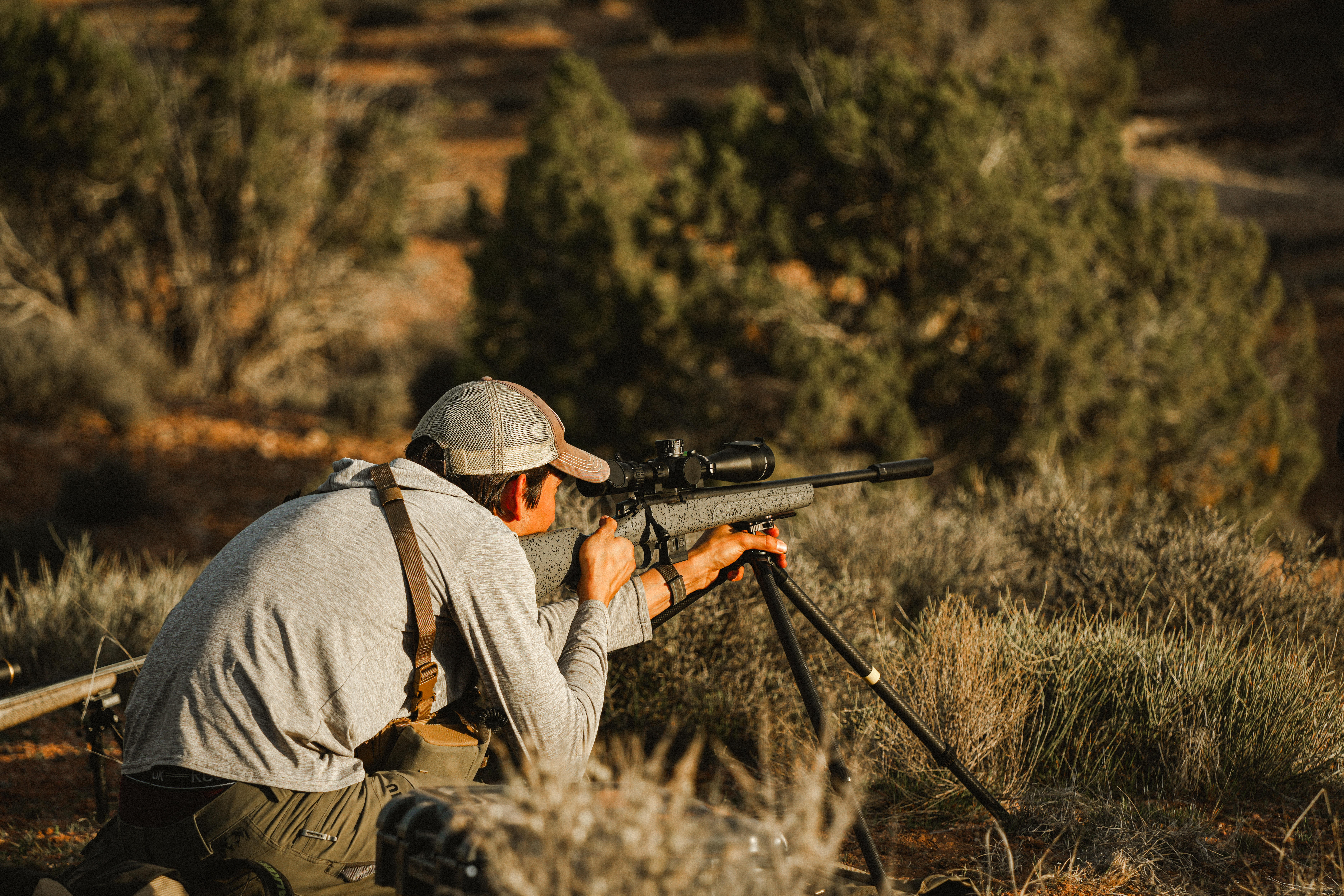
A huge thanks to the Utah BHA chapter and their support on this project. They work extremely hard to make positive impacts for public land.
If you like the sound of these events and want to take part, check out the next event coming up in your state on the BHA events page.
If you are not a member of our fine organization, then now is the time to become one. Join Now
837